Nairobi's Underground Artists Push Back Against Capital's Sanitized Cultural Narrative
This weekend's gallery openings and street performances in Eastlands signal a grassroots movement redefining what counts as legitimate art in the city.
This weekend's gallery openings and street performances in Eastlands signal a grassroots movement redefining what counts as legitimate art in the city.
Three gallery spaces in Nairobi's industrial belt are opening their doors simultaneously this Saturday for what organizers are calling the Eastlands Art Corridor Initiative—a deliberate challenge to the dominance of upmarket galleries clustered around Westlands and the Upper Hill business district.
The timing matters. Nairobi's cultural establishment has long operated as a gated enterprise, with exhibition spaces concentrated in wealthy neighborhoods where entry fees run 500 to 1,200 shillings and opening receptions cater to expatriate professionals and wealthy locals. That gatekeeping is fracturing. What started as informal studio collectives in Kayole and Kariobangi two years ago has crystallized into organized programming that reaches beyond the city's insulated creative bubble.
Gallery Tatanua in Parklands has hosted these emerging artists before, but this weekend represents something different. The three participating spaces—Kariobangi Artists Collective on Lusaka Road, Eastlands Contemporary in the industrial zone near Valley Road, and a new venue, Studio Mjumbe on Kabete Street—have coordinated their schedules to create a circuit. "We're making it impossible for collectors and curators to ignore what's happening outside their usual routes," said one organizer who requested anonymity, citing ongoing tensions with established gallery owners.
The shift reflects changing demographics and economics in Nairobi's art world. A survey conducted by the Kenya National Museum in 2024 found that 68 percent of artists working in the capital earned less than 50,000 shillings monthly from their practice, forcing most to maintain day jobs. That precarity has paradoxically driven innovation. Artists shut out of expensive commercial spaces created their own infrastructure—cooperative studios, WhatsApp-based promotion networks, and weekend performances in public markets.
Kariobangi Artists Collective, which operates from a converted warehouse space paying 8,000 shillings monthly rent, now hosts open studio sessions every second Sunday. What began with twelve participating artists in 2024 has grown to 47, with waiting lists for additional studio slots. The collective charges 200 shillings entry for visitors and uses proceeds to subsidize materials for younger members.
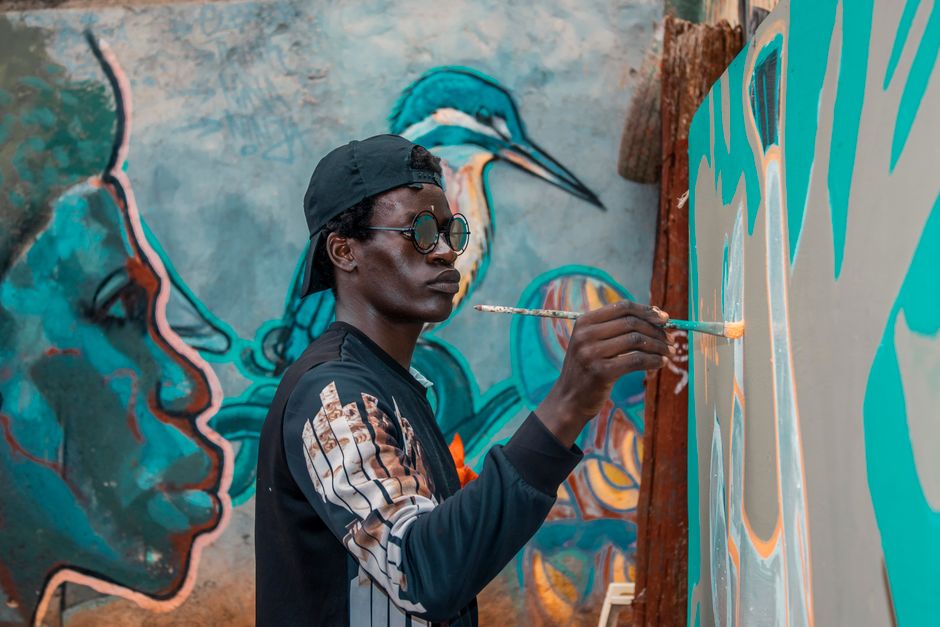
This Saturday's programming includes work by sculptors, digital artists, and performance pieces that deliberately engage with the grit of Eastlands itself. One installation uses discarded plastic from Dandora dump site. Another video piece documents street vendors' daily routines in Gikomba market. The aesthetic is raw—sometimes jarring—and explicitly positioned against the decorative abstraction that dominates Westlands gallery walls.
Distribution networks matter as much as production. A collective called Nairobi Art Dispatch, formed in March 2025, now operates a rotating pop-up schedule across working-class neighborhoods. Last month they installed pieces in Mathare's health center and a primary school in Kawangware. "We're not waiting for institutional validation," the group stated in a June manifesto. "We're building the institutions ourselves."
Pricing reflects this philosophy. Weekend admission to Saturday's three-space circuit costs 150 shillings total. By contrast, major commercial openings in Westlands charge 500 to 800 shillings per venue. Several pieces are available for purchase between 3,000 and 25,000 shillings—roughly one-tenth the median price at established galleries.
For Nairobi's cultural moment, this weekend signals a reckoning. The city's globally recognized contemporary art scene has always been thin at the top—dependent on wealthy patrons, diplomatic networks, and international collectors. What's building from below is messier, less polished, and harder to commodify. Whether institutional galleries will adapt to acknowledge this parallel ecosystem remains an open question. What's certain is that this Saturday, the conversation about what Nairobi art looks like will happen east of Valley Road, not in the Westlands boardrooms.
How does this story make you feel?
Spread the word
About this article
Published by The Daily Nairobi
Daily brief
Free, in your inbox before 7am. Weekdays.
More in culture