Gold Surges Past $4,187 as Risk Assets Rally Hard: What Is Driving the Volatility
A 4.1 percent jump in gold prices alongside a broad equity surge and cratering crude oil is sending mixed signals to investors from Nairobi to New York.
A 4.1 percent jump in gold prices alongside a broad equity surge and cratering crude oil is sending mixed signals to investors from Nairobi to New York.
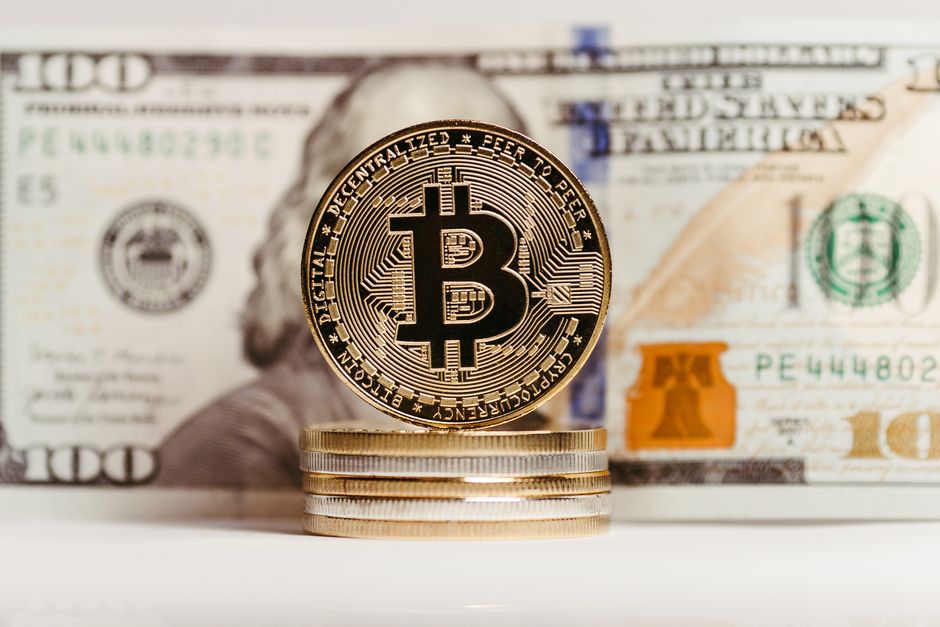
Gold hit $4,187 per troy ounce on Friday, up 4.1 percent in a single session, even as Wall Street posted its strongest day in weeks and Bitcoin climbed 6.66 percent to $62,456. That combination, precious metals and risk assets surging together while oil slides sharply, is the signature of a market under stress, not one celebrating good news. For investors on the Nairobi Securities Exchange, where Safaricom, Equity Group and KCB Group account for the bulk of market capitalisation, the offshore turbulence matters more than the headline gains suggest.
The S&P 500 closed at 7,483, up 1.71 percent, and the Nasdaq Composite finished at 25,833, gaining 1.87 percent. Under the surface, the moves tell a more complicated story. Technology stocks led the advance, partly on positioning and partly on a weaker dollar, with the euro buying $1.1440 by the close of European trade, up 0.47 percent on the day. A softer dollar is broadly supportive for emerging market currencies and for the Kenyan shilling, which has spent much of 2026 under pressure from dollar-denominated import bills, particularly for fuel.
That fuel story now has a new chapter. WTI crude fell 2.78 percent to $68.78 per barrel on Friday. For Kenya, which imports virtually all of its petroleum, that drop carries direct implications for the Energy and Petroleum Regulatory Authority's monthly pump price reviews. Cheaper crude, if sustained through July, could feed through to lower petrol and diesel prices at Kenyan forecourts by August, relieving some pressure on household budgets and on the transport-heavy cost base that runs through nearly every sector of the NSE.
The conventional logic holds that gold and equities move in opposite directions: one rises when fear spikes, the other when confidence returns. The current environment breaks that rule because the driver is dollar weakness, not a clean shift in risk appetite. When the dollar depreciates, gold, which is priced in dollars, becomes cheaper for non-US buyers, lifting demand and price simultaneously with dollar-denominated equities that benefit from overseas earnings translation. The EUR/USD rate at 1.1440 is near its highest level in roughly a year, and that persistent dollar softness is threading through every asset class.
Bitcoin's 6.66 percent surge to $62,456 adds another layer. Cryptocurrency has increasingly traded as a high-beta dollar hedge among institutional desks in Nairobi and other African financial centres. Volumes on local peer-to-peer platforms tend to track these offshore moves with a lag of one to two sessions. The Central Bank of Kenya has not yet released a final regulatory framework for digital asset trading, leaving Kenyan retail participants exposed to global swings without the circuit-breaker protections that govern NSE-listed instruments.
On the NSE itself, the sustained offshore volatility is producing a familiar pattern. Foreign portfolio flows, which account for a disproportionate share of daily turnover on the bourse, tend to retrench when global uncertainty is high regardless of the direction of that uncertainty. Equity Group Holdings and KCB Group, both of which have expanded regionally into Uganda, Tanzania, Rwanda and the Democratic Republic of Congo, are sensitive to cross-border capital flows that tighten when dollar strength spikes and loosen, at least temporarily, when the greenback pulls back as it has this week.
Safaricom's share price, the NSE's single largest stock by market capitalisation, carries an additional layer of complexity. The company's M-Pesa business processes tens of billions of shillings in daily transactions, and its Ethiopian operation remains an ongoing capital commitment denominated partly in birr, a currency with its own severe pressures. A softer global dollar environment does not automatically translate into relief for the birr, meaning Safaricom's translation risk does not disappear simply because Wall Street is rallying.
The near-term picture, then, is one of qualified opportunity wrapped in structural uncertainty. The dollar's retreat and lower crude prices are the two most immediately relevant external developments for Kenyan businesses and consumers. But gold at $4,187 signals that sophisticated money is not abandoning its hedges, and that is the detail Nairobi investors should hold in mind. Markets can rally and remain frightened at the same time. The volatility is not resolving; it is simply, for now, resolving upward.
How does this story make you feel?
Spread the word
About this article
Published by The Daily Nairobi
Daily brief
Free, in your inbox before 7am. Weekdays.
More in Finance


