Walk through the sprawling stalls of Gikomba Market on a Monday morning, and you'll witness something increasingly rare in our globalized world: a shopping ecosystem that hasn't been sterilized by corporate homogenization. Unlike the identical mall chains dotting Singapore or Dubai, Nairobi's retail landscape pulses with the idiosyncratic energy of merchants who've built their livelihoods brick by brick, stall by stall.
The numbers tell part of the story. Gikomba alone moves roughly 2 million items weekly, with secondhand clothing prices ranging from Sh100 to Sh800 depending on quality and origin. Compare that to London's vintage boutiques where a single T-shirt might cost £45, and you glimpse Nairobi's democratizing force—fashion accessibility without the pretense.
But authenticity extends beyond affordability. River Road, stretching from Accra Road toward Kenyatta Avenue, remains East Africa's epicenter for electronic components and computer hardware. Korean and Chinese suppliers have established permanent bases here, yes, but the neighborhood retains its character as a knowledge hub where traders possess encyclopedic expertise about processor generations and motherboard specifications. In contrast, you'll find similar products in Singapore's malls presented as interchangeable commodities.
Westlands represents Nairobi's other retail personality—one increasingly visible in neighborhoods like Kilimani and Lavington. Independent boutiques such as those found along Mpesi Lane showcase Kenyan designers whose work reflects distinctly local aesthetics: Maasai-inspired prints reimagined for contemporary wardrobes, sustainable fashion built on principles of slow consumption. This isn't the sterile minimalism of Manhattan's SoHo anymore; it's rooted, intentional, and reflective of East African creativity.
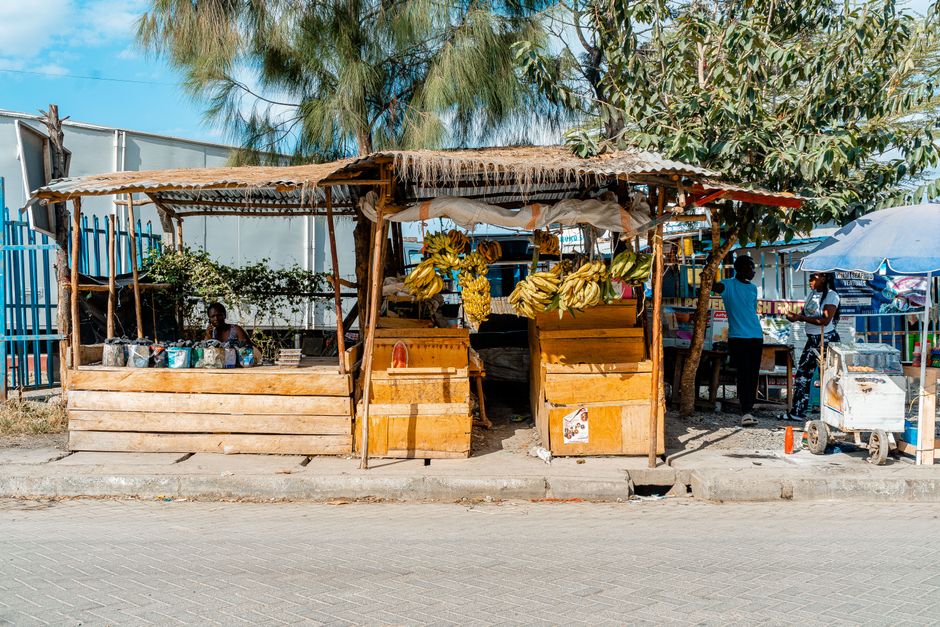
The informal sector deserves particular attention. Vendors operating from Nairobi Central Business District—whether selling fresh produce, traditional fabrics, or handcrafted jewelry—maintain a transaction model based on negotiation and relationship-building. These human interactions, increasingly absent from self-checkout counters and online shopping, create retail spaces where commerce remains a social act rather than a transactional one.
What distinguishes Nairobi isn't merely that goods cost less or selection differs—it's that the city has resisted the flattening effect of global retail standardization. Even as shopping malls multiply across Nairobi's landscape, traditional markets persist, evolve, and thrive. That coexistence, that refusal of either-or thinking, reflects something profoundly Nairobian: an ability to honor tradition while embracing modernity, to maintain identity while remaining open to the world.
For the global traveler or conscious consumer, that combination has become extraordinarily rare—and increasingly precious.
This article was compiled by AI from the sources linked above and screened before publishing. See our editorial standards.