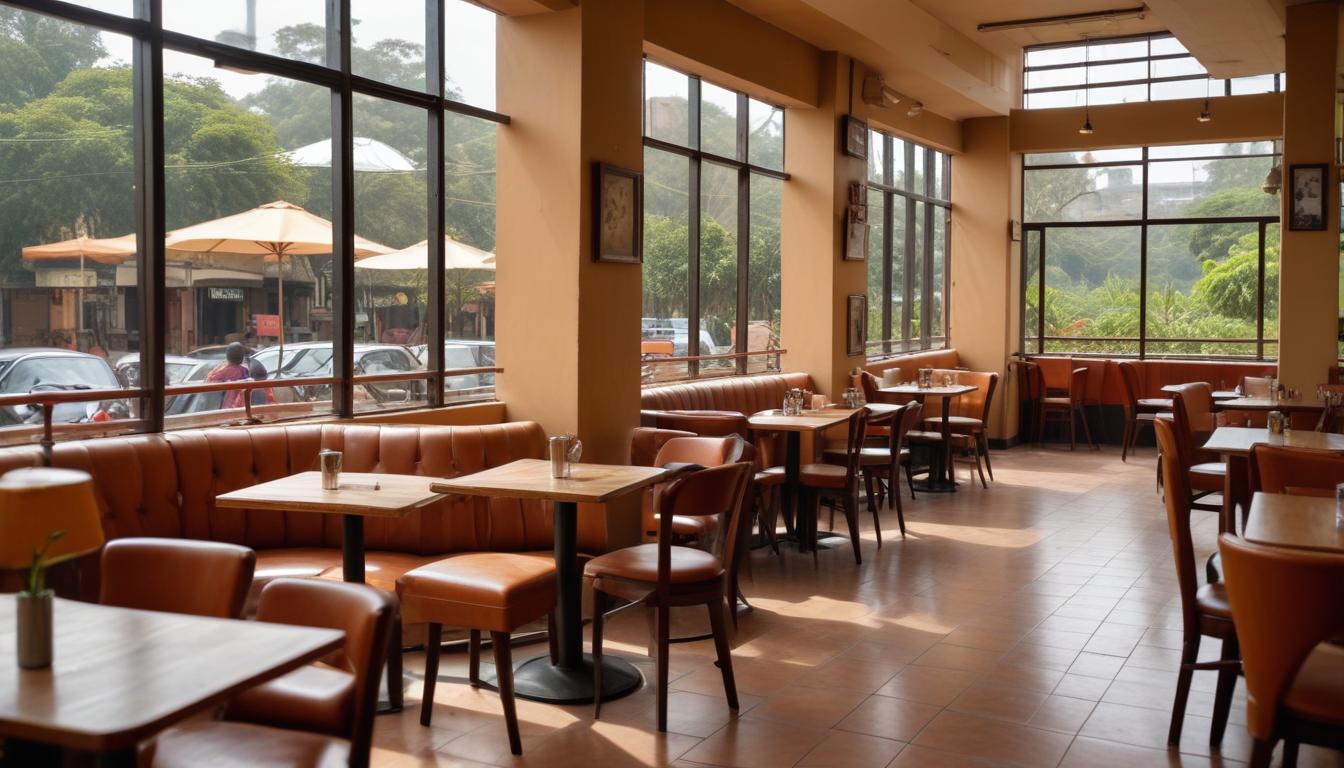
On a Tuesday afternoon in Kilimani, outside Braeburn School, a cluster of parents lingers near the gates with coffees from Java House. Their children aren't quite ready for pickup—the after-school chess club runs another fifteen minutes—but nobody's rushing. This unhurried ease, repeated across Nairobi's affluent neighbourhoods, reveals something deeper than casual parenting: it's the architecture of intentional community.
The character of family life in Nairobi has undergone a quiet transformation. Where parents once managed school runs in isolation, neighbourhoods like Kilimani, Westlands, and Lavington have developed what might best be described as "parenting villages"—informal networks that blend school gates, coffee shops, and shared WhatsApp groups into ecosystems of mutual support.
"It's about proximity and shared values," explains one Kilimani resident familiar with the dynamics. Families cluster around specific schools—Braeburn, Nairobi School, and Peponi School draw concentrations of expatriate and wealthy Kenyan families—creating natural gravity points. The streets around these institutions have adapted accordingly. Restaurants like Artisan Coffee and Brew Bistro on Kilimani Road have become de facto community hubs where school talk dominates the afternoon agenda.
The economics matter too. Private school fees in Nairobi range from 800,000 to over 2.5 million shillings annually, placing families in a specific socioeconomic band that shapes neighbourhood composition. This concentration creates homogeneity—sometimes stifling, often pragmatic. Parents with similar financial capacity naturally organize shared resources: driver pools for school runs, group tutoring arrangements, and coordinated weekend activities.
Westlands presents a different model. Here, the neighbourhood character orbits around convenience rather than exclusivity. The mix of international schools, local institutions, and apartment-living creates faster-paced, more transient communities. Yet even here, schools like Rosslyn Academy generate recurring meetpoints where relationships crystallize.
What's striking is how these parenting villages police themselves internally. WhatsApp groups function as neighborhood governance, discussing everything from school policies to construction noise. The vibe is simultaneously supportive and surveillance-conscious—a natural tension in tight-knit communities anywhere.
For children, this village structure offers tangible benefits: safer independent movement, peer density that enables friendships, and supervised social spaces. For parents, it provides emotional scaffolding through the exhausting work of urban child-rearing.
Yet questions linger. These self-curated neighbourhoods, while functional, risk deepening Nairobi's class divisions. The families creating robust parenting villages have largely opted out of public systems, leaving other neighbourhoods—and schools—to navigate differently. The question facing Nairobi isn't whether these communities work, but whether their success is sustainable when built on such narrow socioeconomic foundations.
This article was compiled by AI from the sources linked above and screened before publishing. See our editorial standards.