news
Nairobi Land Registry Grapples With Decades of Forged Property Documents
A decades-old scandal of forged and duplicate property documents is forcing a reckoning at Ardhi House, and the choices made in the next twelve months will shape who actually owns what in Kenya's capital.
How we reported this
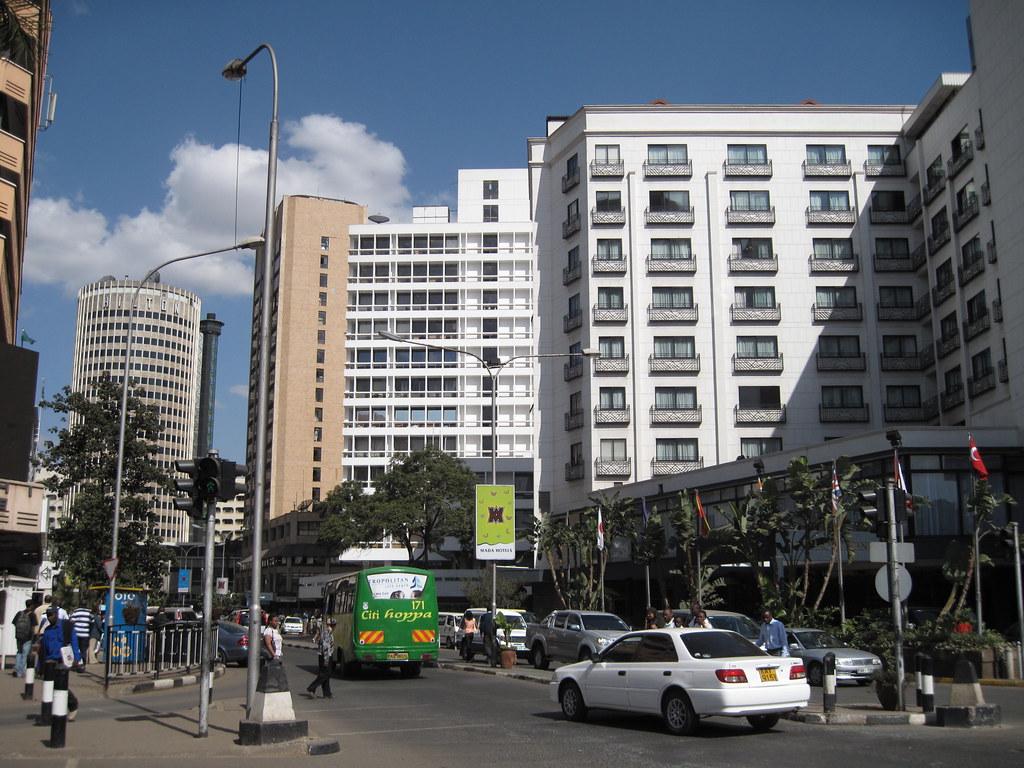
Kenya's National Land Commission has confirmed it is processing a backlog of disputed title deeds in Nairobi, many of them flagged as duplicates or forgeries, with the Lands Ministry acknowledging the problem stretches across high-demand neighbourhoods from Westlands to South B. The immediate question is not whether the digital migration of land records will fix this, it is whether the government has the political will to cancel fraudulent documents and compensate those who bought land in good faith.
The timing matters. The Ruto administration is already under fiscal pressure from an IMF austerity programme that has squeezed public investment budgets, and the National Land Information Management System, known as NLIMS, has been in a partial rollout since 2022 without reaching the full coverage that would make duplicate detection automatic and near-instant. Meanwhile, Gen Z-era public anger at government incompetence has lowered tolerance for bureaucratic drift. Property fraud is no longer a quiet scandal absorbed by lawyers and middle-class buyers; it is now a political liability.
What the Duplication Problem Actually Looks Like on the Ground
Walk into the Ardhi House registry on Ngong Road on any working morning and you will find queues of claimants, lawyers, and surveyors waiting to reconcile conflicting records. The core issue is structural: when Kenya converted older registry systems, the Register of Titles, the Government Lands Act register, and the Registered Land Act register, into the single Land Registration Act framework introduced in 2012, inconsistencies were carried forward rather than resolved. A parcel in Kilimani or a plot in Ngong Road's peri-urban fringes can appear under two different reference numbers, sometimes held by two different registered owners, both with documents that passed the stamp and seal test at the time of issue.
The Nairobi City County government and the national Lands Ministry share overlapping jurisdiction over surveying and physical planning approvals, and that split has historically created gaps where fraudulent subdivision can be registered by one arm without the other flagging a conflict. Mavoko, just southeast of the city boundary, has been a particularly acute zone; so has parts of Ruai along the Eastern Bypass corridor, where speculative land buying accelerated after the road opened.
The NLIMS digital platform, which the government set a target of having fully operational by the end of 2024, missed that deadline. As of mid-2026, Lands Cabinet Secretary officials have indicated that digitisation covers roughly 40 percent of Nairobi's parcels, a figure cited in Parliamentary committee proceedings earlier this year, leaving the majority still vulnerable to the analogue manipulation that generated the backlog in the first place.
Three Decisions That Will Define the Next Phase
The NLC and the Lands Ministry face at least three concrete choices in the coming months. First, they must decide whether to establish a fast-track adjudication tribunal specifically for Nairobi duplicate cases, or continue routing disputes through the Environment and Land Court on Milimani Road, a court already congested with cases that can take five years to resolve. A dedicated tribunal with a fixed timetable would be faster but requires budget allocation that Treasury may resist.
Second, the government must settle the compensation question. Innocent purchasers who bought duplicated titles, often paying between Sh8 million and Sh25 million for plots in middle-ring suburbs like Ruaka or Kasarani, cannot simply be told their documents are void. A statutory indemnity fund exists in principle under the Land Registration Act, but it has never been adequately capitalised.
Third, and most consequentially, the pace of NLIMS completion needs a hard new deadline backed by ring-fenced funding. Digitising the remaining 60 percent of Nairobi's parcels is the structural fix without which every other measure is a patch. Housing advocates and the Kenya Property Developers Association have been calling for that commitment for two budget cycles.
Without movement on all three fronts before the 2027 election cycle begins to dominate the political calendar, the duplicate title crisis will simply accumulate more victims, and more court files stacking up at Milimani Road.