How Nairobi's New Social Housing Zoning Rules Are Reshaping Land Values Across Syokimau and Ruaka
Revised density guidelines and developer incentives are quietly transforming the economics of Kenya's fastest-growing residential corridors.
Revised density guidelines and developer incentives are quietly transforming the economics of Kenya's fastest-growing residential corridors.
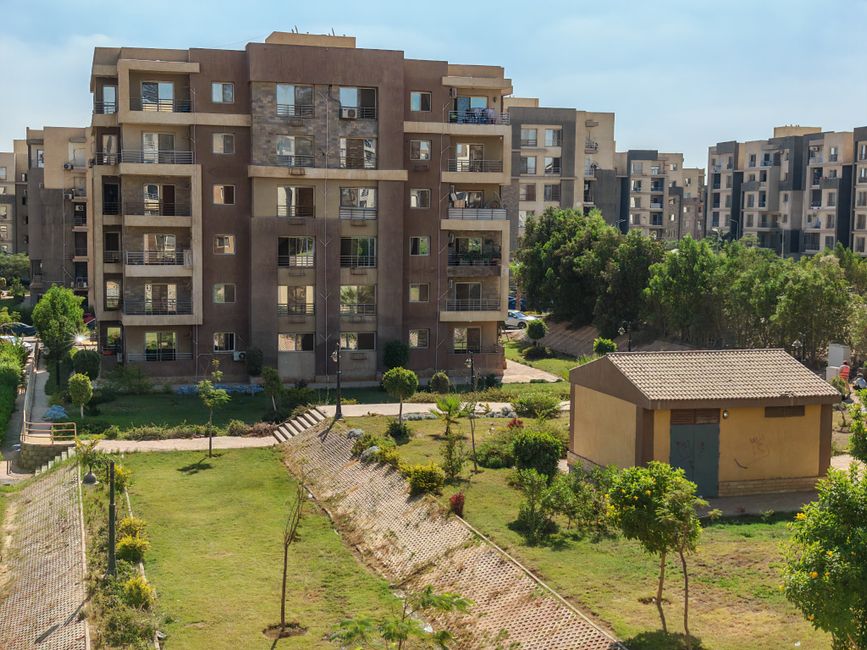
Nairobi's property landscape is experiencing a subtle but significant shift. The National Housing and Urban Development Authority's revised planning framework—gazetted in March 2026—has redrawn the financial calculus for developers in the city's peripheral growth zones, with measurable ripple effects already visible in land transactions and project approvals.
The policy changes, which increased permissible plot ratios in designated affordable housing corridors along the Nairobi-Machakos highway and Ruaka-Githunguri belt, represent the most substantial intervention in residential zoning since the 2019 Nairobi City Integrated Development Plan. Land values in Syokimau, previously averaging KES 2.8 million per quarter-acre, have climbed approximately 12 percent since the announcement—a premium driven entirely by new development capacity rather than speculative buying.
What matters most to market observers is the incentive structure. Developers constructing units priced below KES 6 million now qualify for accelerated permitting and a five-year property tax holiday on affordable units. The County Planning Committee has fast-tracked 23 applications in these zones since April, compared to four in the equivalent period last year. This administrative change alone has reduced project approval timelines from 14 months to six.
The policy's architects argue it addresses a genuine crisis: while Nairobi's average residential property costs KES 15 million, middle-income earners—teachers, nurses, junior civil servants—remain locked out of formal housing. Projects like the Kenya Red Cross-backed development in Kahawa Sukari and several cooperative schemes in Ruaka's Matangi sector now pencil out financially under the new rules.
Yet implementation gaps persist. The county's Infrastructure and Planning Department has struggled to update zoning maps for all target corridors, creating uncertainty for investors evaluating land north of Nairobi West or in peripheral Kilimani expansions. Additionally, the policy doesn't address transport connectivity; without completion of the Nairobi Expressway's planned eastern routes, commute times from Syokimau remain punitive for daily workers.
Real estate analysts note a bifurcation forming: premium segments in Westlands and Lavington remain insulated by scarcity and established networks, while the emerging middle market increasingly clusters around policy-enabled zones. A KES 5.5 million two-bedroom apartment in Ruaka now competes directly with equivalents priced at KES 8-9 million in Kilimani, fundamentally reshaping buyer behaviour.
As the policy bededs in, the real test lies ahead: whether administrative efficiency and tax incentives can sustainably deliver units within reach of Nairobi's expanding working middle class—or whether developer interest will simply inflate prices in newly enabled corridors.
This article was compiled by AI from the sources linked above and screened before publishing. See our editorial standards.
How does this story make you feel?
Spread the word
About this article
Published by The Daily Nairobi
Daily brief
Free, in your inbox before 7am. Weekdays.
More in Property