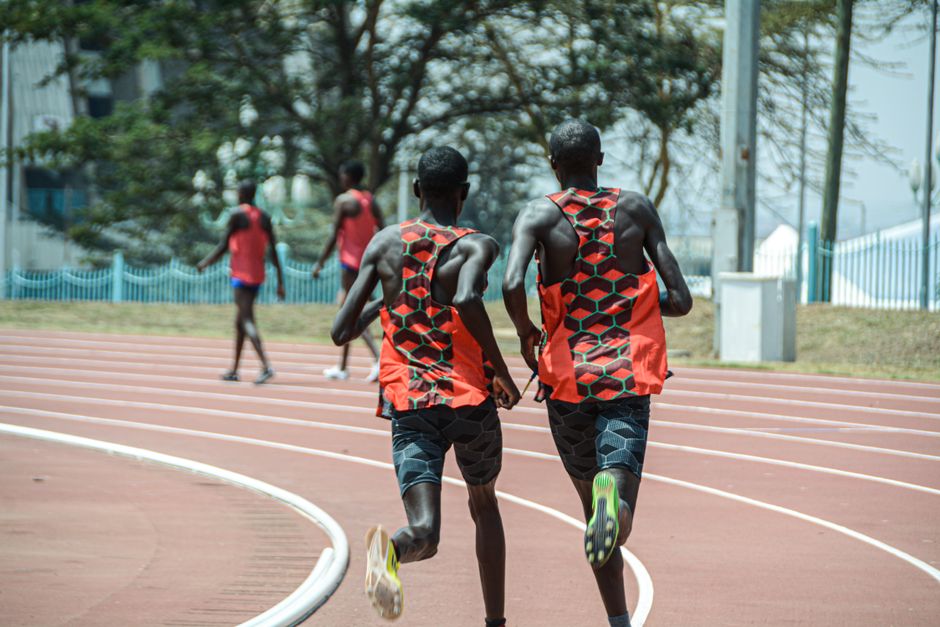
Nairobi's reputation as a global endurance sports powerhouse rests on the shoulders of runners and cyclists who have learned to train despite, not because of, the city's infrastructure. While athletes from Nairobi continue to dominate international marathons and cycling circuits, the capital lacks the coordinated network of facilities that would be expected to support such talent.
The Ngong Road Forest corridor remains the backbone of local running culture. Every morning before dawn, hundreds of serious distance runners converge on this 20-kilometre stretch, navigating traffic, uneven surfaces, and safety concerns that would alarm sports administrators elsewhere. Yet this informal arrangement—largely unsupervised and certainly not purpose-built—continues to produce Kenya's marathon elite.
For cycling, the situation is similarly fragmented. While the Uhuru Park circuit and sections of the Mombasa Road corridor serve as informal training grounds, Nairobi lacks a dedicated velodrome or purpose-built cycling track. Competitive cyclists often travel to Kisumu or train during early morning commutes, squeezing preparation around traffic patterns and road conditions that vary dramatically by season.
The triathlon community faces perhaps the greatest challenge. Training requires access to three distinct environments—running, cycling, and water. Nairobi's few pools are concentrated in wealthy estates like Muthaiga and Karen, with membership fees reaching 15,000 shillings monthly. Open-water swimming remains virtually unavailable for training purposes, forcing aspiring triathletes to rely entirely on pool work or travel to coastal regions for full-distance preparation.
Recent initiatives suggest awareness of these gaps. Several local sports organisations have begun mapping training corridors in South B and Westlands, while private fitness facilities have expanded their offering. However, these remain scattered and largely inaccessible to grassroots athletes who form the foundation of Kenya's endurance pipeline.
The contrast is telling. Nairobi produces runners capable of sub-2:05 marathons, yet lacks a single dedicated athletics track with the standard 400-metre loop and proper training facilities. The city has no municipal triathlon venue, no professional cycling academy, and no coordinated system for athlete development infrastructure.
What exists works because of athlete determination, not systemic support. Until Nairobi's local government and private sector recognise that world-class sports infrastructure generates both talent and tourism revenue, the capital will continue punching above its weight—not because of its facilities, but in spite of their absence.
This article was compiled by AI and screened before publishing. See our editorial standards.