Why Nairobi's Tech Ecosystem Stands Apart in the Global Smart City Race
From mobile-first innovation to leapfrog infrastructure solutions, Nairobi is rewriting the playbook for digital transformation in emerging markets.
From mobile-first innovation to leapfrog infrastructure solutions, Nairobi is rewriting the playbook for digital transformation in emerging markets.
While London and Singapore jostle for smart city supremacy with billion-dollar tech budgets, Nairobi is quietly proving that digital transformation doesn't require copying the West's playbook. The Kenyan capital's distinctive approach—born from necessity, refined through innovation—is attracting global attention as cities worldwide grapple with congestion, service delivery, and climate challenges.
The difference lies in constraint-driven innovation. Nairobi's tech ecosystem, clustered around hubs like Nairobi Innovation Hub in Westlands and the emerging startup corridor along Ngong Road, has spent two decades solving problems that Silicon Valley barely recognises. Mobile money infrastructure, built on M-Pesa's 2007 launch, created a parallel digital economy that leapfrogged traditional banking. Today, that foundation underpins smart city solutions: digital property tax payments, mobile-enabled permit systems, and real-time bus tracking via M-Pesa integration.
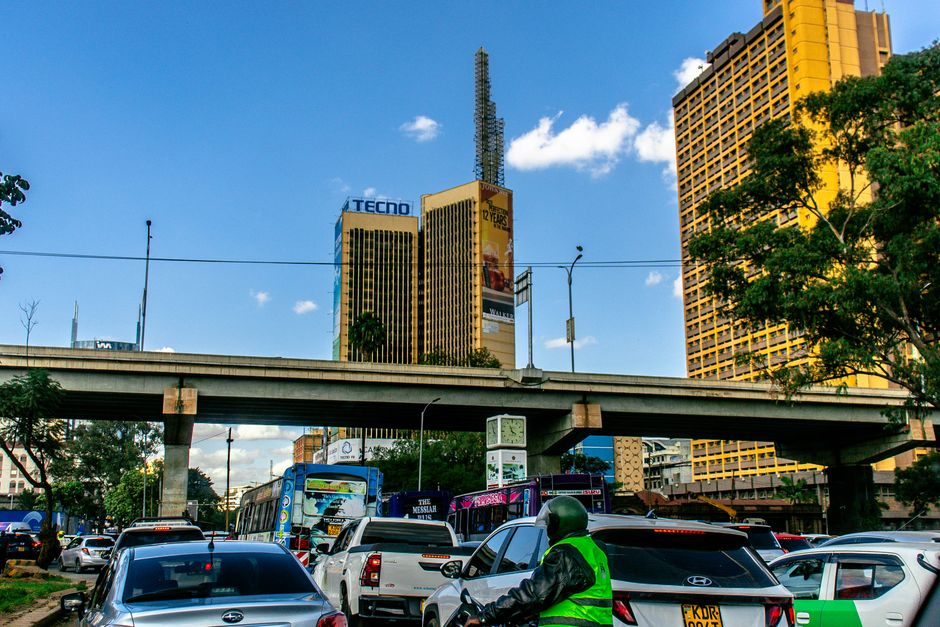
Consider traffic. While developed cities debate autonomous vehicles, Nairobi's startups have tackled gridlock with hyper-local, data-light solutions. Real-time navigation apps built for 2G networks, informal minibus (matatu) digital ticketing systems, and AI-powered traffic signal optimization at key junctions like the Globe Roundabout and Haile Selassie Avenue have reduced commute times by an estimated 12-15% in pilot zones.
The city's informal settlement population—nearly 60% of Nairobi's 4.7 million residents—presents another distinctive challenge. Rather than formal infrastructure rollouts, the ecosystem has developed creative solutions: solar-powered water kiosks with digital payment systems in Kibera, blockchain-based land registry pilots in Mathare, and community-managed sensor networks for flood early warning in Eastlands. These aren't hypothetical smart city concepts; they're operational systems serving real populations.
Infrastructure costs tell the story. Deploying smart city tech in Manhattan might run $500,000 per intersection. In Nairobi, startups achieve similar outcomes for $8,000-15,000 per site, using modular, open-source solutions instead of proprietary platforms. This economics-of-scale efficiency is attracting interest from cities across Africa, Southeast Asia, and Latin America facing similar constraints.
The city's advantage also reflects its human capital. Nairobi hosts over 800 active tech startups, with a median developer salary of $18,000-25,000 annually—60% cheaper than Western counterparts, yet drawing talent globally. Universities like Strathmore and the University of Nairobi produce engineers fluent in both cutting-edge technologies and local problem-solving.
As global smart city investments exceed $500 billion annually by 2026, Nairobi's model—pragmatic, mobile-first, constraint-responsive—offers something rare: a blueprint that actually works for the 80% of urban growth happening in emerging markets, not the wealthy 20%.
This article was compiled by AI from the sources linked above and screened before publishing. See our editorial standards.
How does this story make you feel?
Spread the word
About this article
Published by The Daily Nairobi
Daily brief
Free, in your inbox before 7am. Weekdays.
More in tech