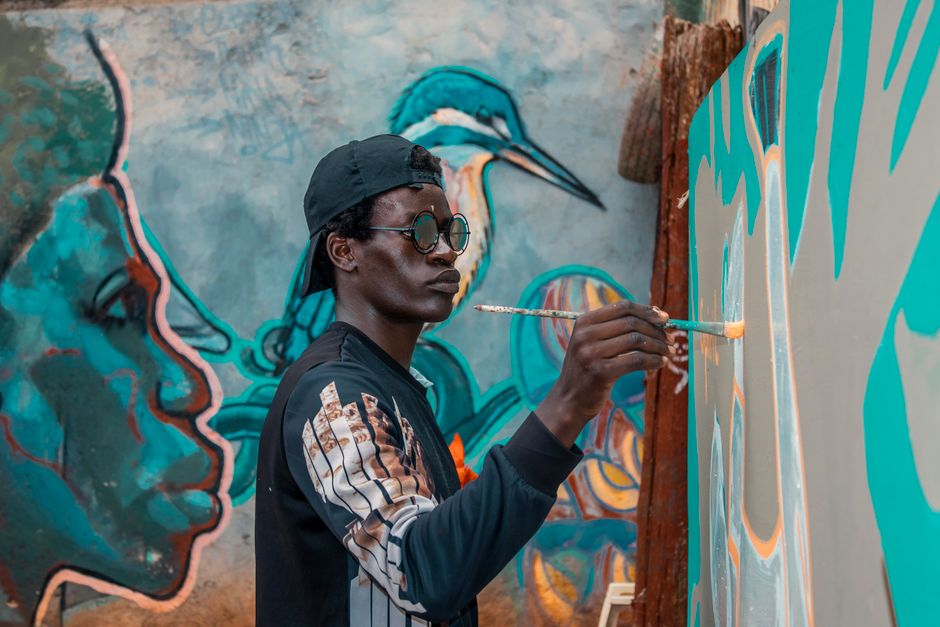
Nairobi's cultural calendar on any given Saturday now reads like a small festival schedule unto itself. Galleries open in converted colonial buildings along River Road. Live music spills from rooftop bars in Westlands. Street art crawls have become Instagram staples. But this wasn't the case 20 years ago, when the city's creative infrastructure barely existed outside a handful of university spaces and occasional international touring productions.
The transformation matters now because Nairobi is actively competing for regional cultural prestige just as East Africa's middle class expands and international attention on African cities intensifies. Unlike cities that inherited established arts districts, Nairobi built its scene deliberately—through policy, investment, and the determination of individual venue operators who saw economic and social potential where others saw vacant property.
Where the Scene Actually Lives
The Nairobi National Museum on Museum Hill remains foundational, but the real action happens elsewhere. Bomas of Kenya in Langata—traditionally a folklore and ethnographic space—has evolved beyond static displays into hosting contemporary performances and artist residencies. More significantly, the Gallery Watatu on Lonrho House in Upper Hill represents the model that transformed the city: a commercial gallery founded in 1994 that proved contemporary African art could sustain a business model. Its success spawned imitators across Runda, Parklands, and the industrial Eastlands neighborhoods where warehouse conversions now host artist studios and experimental performance spaces.
The Circle Art Agency in Kilimani and Kuona Trust's studios in Kayole operate at opposite ends of the economic spectrum—one catering to collectors and tourists, the other providing free workspace to emerging artists. Both opened within the last eight years. The Goethe-Institut on Gigiri and the British Council on Upper Hill function as anchor tenants, offering subsidized performance and exhibition space that smaller Kenyan organizations cannot afford.
Numbers Tell the Growth Story
In 2005, Nairobi had approximately 12 functioning galleries. The Kenya National Bureau of Statistics hasn't tracked arts venues formally, but industry surveys by the Nairobi Creative Economy Group documented 340 registered creative businesses by 2023, up from 87 in 2010. Average ticket prices for local theater productions at venues like the Kenya National Theatre range from 500 to 1,500 Kenyan shillings—accessible to middle-income residents but low enough that production budgets remain tight and entrepreneurial.
The broader creative economy contributes an estimated 2.8 percent to Nairobi's gross metropolitan product, according to 2024 research by the British Council. Film production in particular expanded dramatically after the government simplified licensing procedures in 2015, with international productions like the recent World Cup documentary filming extensively in and around the city.
The shift wasn't inevitable. Two decades ago, safety concerns kept tourists confined to Nairobi National Park and Karen, and cultural institutions felt peripheral to a city focused on commerce and traffic. The turning point came around 2012-2014 when a cohort of expatriate-connected Kenyans returned from London, New York, and Cape Town with capital and ambition. They bought property cheaply in formerly underutilized areas, converted warehouses into performance spaces, and essentially created demand through programming.
If you're in Nairobi today and want to experience this evolved landscape, the Nairobi National Museum remains essential but shouldn't be your only stop. Walk through the Eastlands industrial parks on a Saturday afternoon and you'll find artist open studios. Check programming at the Kenya National Theatre for contemporary work—it's booking two to three locally produced plays monthly now, compared to occasional international touring shows in 2010. Gallery Watatu and similar commercial spaces offer free opening nights, often featuring live music and allowing you to see how the market actually functions.
This scene will continue fragmenting geographically. Pandemic-era remote work drew creative professionals to the suburbs, and studios are following. Nairobi's cultural center of gravity no longer exists in a single neighborhood but rather exists in the network of relationships between operators, artists, and audiences scattered across the city. That distributed model makes the scene more resilient but harder to visit in a single day.