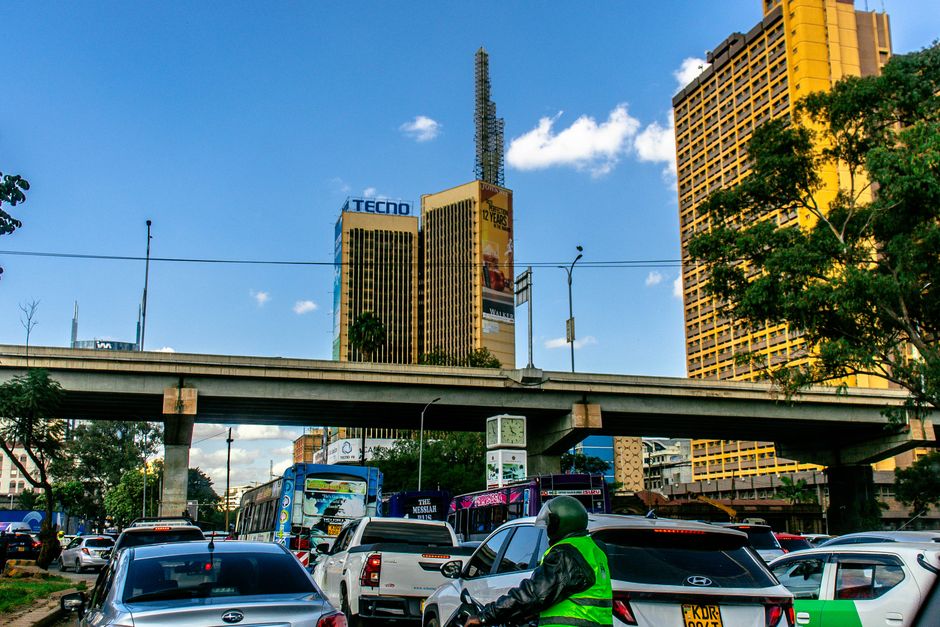
For the past eighteen months, the stretch of Ngong Road between Wilson Airport and the Ngong Hills has been a study in controlled chaos. Excavators carve through red earth, concrete mixers churn continuously, and traffic—once flowing in three lanes—now squeezes into a single, congested bottleneck. Yet amid the dust and noise, Nairobi's residents are grappling with a complex reality: the promise of faster commute times versus the present agony of business disruption and uncertain livelihoods.
The Sh187 billion elevated expressway project, designed to decongest one of the city's most vital arteries, is reshaping daily life for thousands. Gloria Kipchoge, who runs a small provisions shop near the Ngong Road-Lavington intersection, describes the impact bluntly. "My sales have dropped by nearly 40 percent since the barriers went up," she says. "Customers can't easily access the storefronts, and delivery trucks arrive late because of the detours." Her concern echoes across the informal economy that lines the corridor—from hawkers selling mobile phone credit to mechanics operating from makeshift garages.
Yet not all voices express frustration. James Muthoka, a commuter who spends roughly two hours daily traveling from South B to his workplace in Upper Hill, sees redemption in the timeline. "Yes, it's terrible now, but I've calculated that once complete, my journey could drop to 35 minutes," he says. "That's worth the temporary suffering." Such sentiment reflects a broader pragmatism among Nairobi's middle class, many of whom view infrastructure pain as an investment in the city's competitiveness.
The project has also prompted conversation about equitable development. Community activists argue that while the flyover will benefit private motorists, the reliance on personal vehicles excludes Nairobi's majority—the millions dependent on matatus and public transit. "We need transport solutions that work for everyone, not just those who can afford cars," notes Faith Wanjiru of the Ngong Road Residents Association. The Kenya Urban Roads Authority has announced parallel improvements to pedestrian pathways and bus lanes, though residents remain skeptical about implementation timelines.
Construction is expected to conclude by mid-2028, with phased opening of sections beginning in early 2027. For now, Nairobi continues its dance between disruption and hope—a city betting that short-term pain will unlock long-term gains. How successfully it navigates this tension will likely define urban sentiment around future megaprojects across East Africa's most dynamic metropolis.
This article was compiled by AI from the sources linked above and screened before publishing. See our editorial standards.