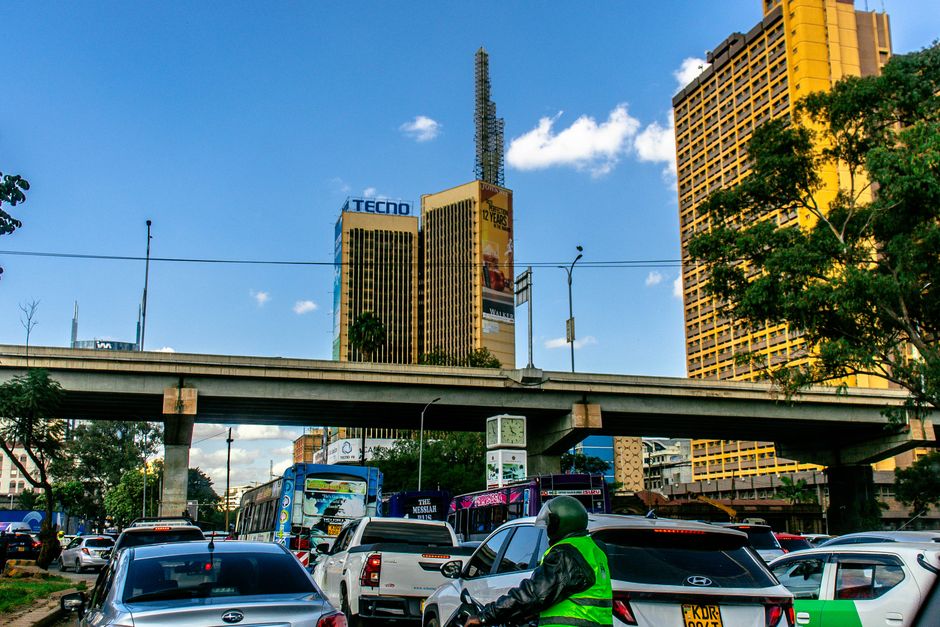
How Nairobi's Transport Crisis Led Us to Today's Mega-Projects
Two decades of congestion, failed planning, and political will have shaped the infrastructure overhaul reshaping the city's arteries.
Two decades of congestion, failed planning, and political will have shaped the infrastructure overhaul reshaping the city's arteries.
The gridlock that paralysed Nairobi during the early 2000s—when a journey from Westlands to South C could consume three hours—was not inevitable. It was the cumulative result of decades of underinvestment, rapid urbanisation, and a chronic shortage of integrated transport planning that left the city's infrastructure gasping under the weight of its own success.
By 2010, Nairobi's population had swelled to over 3 million residents, yet the city's road network remained largely unchanged from the 1980s. The Nairobi-Mombasa highway, Kenya's economic lifeline, operated at near-total capacity during peak hours. The parkway systems that once connected Kibera to Kilimani, and Eastlands to the CBD, had deteriorated into potholed nightmares. Matatus dominated the transport landscape, operating with minimal regulation across routes serving everyone from Ongata Rongai to Ruai.
The turning point came incrementally. The completion of the Southern Bypass in 2012 offered the first major relief, redirecting heavy traffic away from Uhuru Highway and the congested CBD. Yet it was merely a stopgap. Real pressure for systemic change mounted as multinational corporations threatened to relocate operations, and Nairobi's ranking as a global financial hub slipped against competitors like Lagos and Cape Town.
The Standard Gauge Railway, launched in 2017, represented the first bold attempt to break the mould, even as it drew criticism over costs exceeding KES 327 billion. Regardless of its economic outcomes, the SGR crystallised an uncomfortable truth: Nairobi needed coordinated, multi-modal transport infrastructure. Bus Rapid Transit corridors emerged on Thika Road and later Mombasa Road, redrawing how hundreds of thousands commute daily.
What we're witnessing now—the elevated expressways being plotted through Nairobi's arterial routes, the expansion of the light rail network, the reimagining of the CBD's parking and pedestrian systems—didn't spring from visionary thinking alone. They emerged from congestion, failed promises, and the accumulated frustration of a city that outgrew its bones faster than planners could adapt.
The current infrastructure boom reflects hard-won lessons. In the 1990s, no one imagined we'd need alternatives to personal vehicles. By 2020, it was obvious. The projects reshaping Nairobi today aren't radical departures—they're the inevitable consequences of ignoring warning signs for far too long. Whether they'll succeed depends on whether we've finally learned to plan ahead.
This article was compiled by AI from the sources linked above and screened before publishing. See our editorial standards.
How does this story make you feel?
Spread the word
About this article
Published by The Daily Nairobi
Daily brief
Free, in your inbox before 7am. Weekdays.
More in News