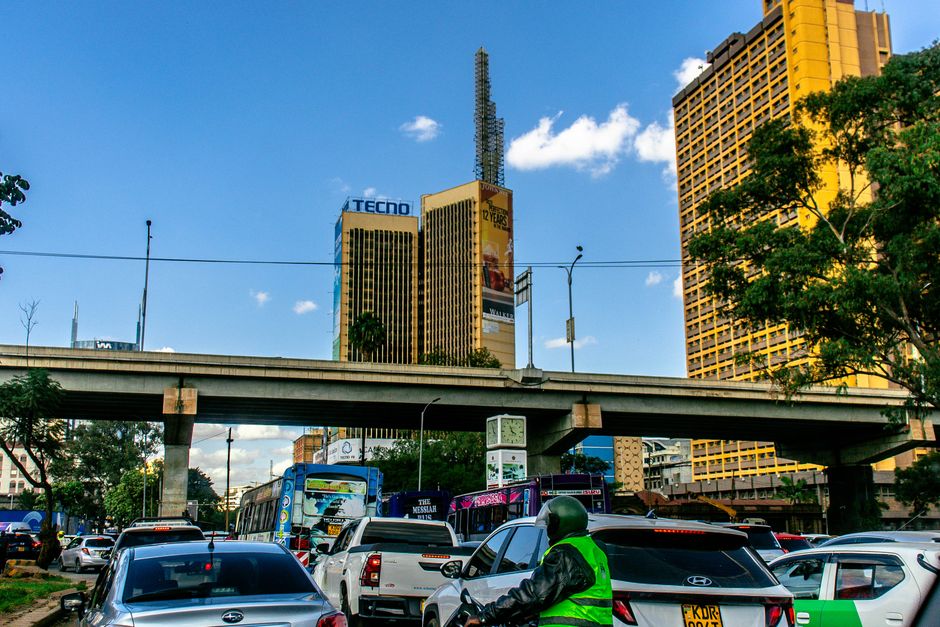
Nairobi stands at a pivotal moment in its infrastructure evolution. With the Standard Gauge Railway operating below capacity, the Bus Rapid Transit system preparing for its Phase 2 rollout, and the long-delayed Southern Bypass construction finally gaining momentum, the city faces three interconnected decisions that will fundamentally reshape urban mobility over the next ten years.
The first challenge concerns the SGR's future. Since its 2017 launch, the railway has struggled with profitability, carrying fewer passengers than projected while servicing a debt burden exceeding Sh400 billion. City planners must now decide whether to subsidise operations to boost ridership or restructure the line entirely. Currently, the SGR connects Nairobi's Central Business District to the Standard Gauge Railway Station in Embakasi, yet remains disconnected from the wider metropolitan transport network. Without integration with the BRT system and informal matatu routes, it risks remaining a prestige project rather than a mass transit solution serving the 4.3 million people in the Greater Nairobi area.
The second decision involves the Bus Rapid Transit expansion. Phase 1, operational along Thika Road and parts of Mombasa Road, has reduced travel times by approximately 20 minutes during peak hours. However, Phase 2—which will extend service to Outer Ring Road, linking Westlands to Hurlingham and beyond—requires Sh8 billion in additional financing. City authorities must determine whether to prioritise corridor extensions or deepen service penetration in underserved areas like Kibera and Mathare, where informal transport currently dominates.
The third, and perhaps most pressing, involves the Southern Bypass. Construction resumed in 2025 after years of delays, with completion now targeted for 2028. This 110-kilometre route promises to redirect transit traffic away from the congested CBD, potentially freeing up arterial roads like Kenyatta Avenue and Uhuru Highway for local circulation. Yet its success depends on complementary decisions: will the city invest in connector roads to Nairobi's industrial zones? Will toll mechanisms be implemented, and if so, at what price point?
The underlying tension is philosophical. Nairobi's transport future hinges on whether the city chooses to invest in premium, high-capacity systems serving specific corridors, or in distributed, equitable networks that reach informal settlements and outlying suburbs. Current budgetary constraints suggest a hybrid approach is unlikely.
These decisions must be made within months. The window for influencing these projects—through public input, regulatory frameworks, and resource allocation—is narrowing rapidly. Nairobi's planners cannot afford to defer these choices any longer.
This article was compiled by AI from the sources linked above and screened before publishing. See our editorial standards.