Nairobi's Green Future Hinges on What City Leaders Say Next About Waste and Water
As environmental pressures mount, officials and experts are laying out competing visions for how Kenya's capital can build a sustainable future.
As environmental pressures mount, officials and experts are laying out competing visions for how Kenya's capital can build a sustainable future.
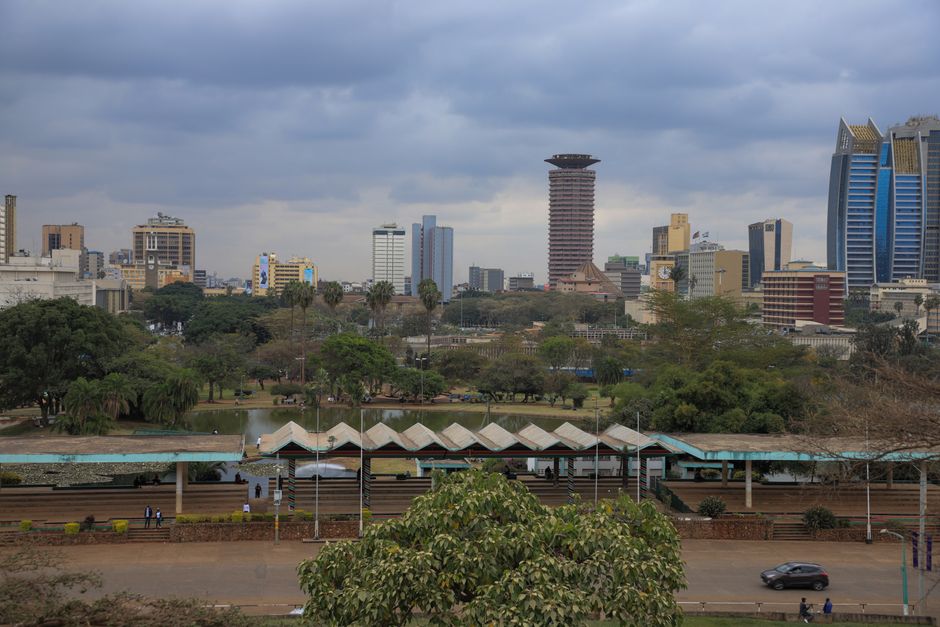
The conversation around Nairobi's environmental crisis has shifted decisively in recent months, with city administrators, conservation groups, and academic institutions now openly debating what sustainable development actually looks like for a metropolis of nearly 5 million people.
At the heart of these discussions is waste management—a challenge that has plagued neighbourhoods from Kibera to Westlands for decades. The Nairobi City County's Environmental and Energy department recently acknowledged that the city generates approximately 7,000 tonnes of waste daily, with less than 60 percent finding its way to approved disposal sites. Officials speaking at a June sustainability forum held at the Safari Park Hotel outlined plans to expand recycling infrastructure along key routes including Ngong Road and the Industrial Area, though implementation timelines remain vague.
Meanwhile, water scarcity continues to dominate expert commentary. The Kenya Institute for Public Policy Research and Analysis has released updated projections suggesting Nairobi faces a 300-million-cubic-metre annual water deficit by 2030 if current consumption patterns persist. Senior hydrologists have called for urgent investment in the Ndakaini and Muringa dam systems, while others argue for stricter regulation of water extraction in Kiambu County, which feeds supply lines into the city.
Private sector voices are equally prominent in these debates. Major real estate developers operating in areas like Runda and the Upper Hill have begun incorporating green building standards into new projects, citing both regulatory pressure and investor demand. However, affordability remains contentious—a 200-square-metre sustainable apartment in these zones now commands premiums of 15-25 percent above conventional units.
The Nairobi Rivers Commission, tasked with rehabilitating the Nairobi and Mathare rivers, has released ambitious restoration targets for 2027, focusing on pollution control and riparian buffer zones. Yet experts warn that without coordination with informal settlements along these waterways, success will remain elusive.
Perhaps most tellingly, civil society organizations working across the city—from Mukuru to South B—are now challenging top-down approaches. They argue that sustainability initiatives must address inequality directly, ensuring that low-income residents aren't simply pushed aside in the rush toward a "green" Nairobi.
The coming months will reveal whether these stated commitments translate into concrete action or become another layer of rhetorical padding in a city still struggling to balance growth with environmental responsibility.
This article was compiled by AI from the sources linked above and screened before publishing. See our editorial standards.
How does this story make you feel?
Spread the word
About this article
Published by The Daily Nairobi
Daily brief
Free, in your inbox before 7am. Weekdays.
More in News