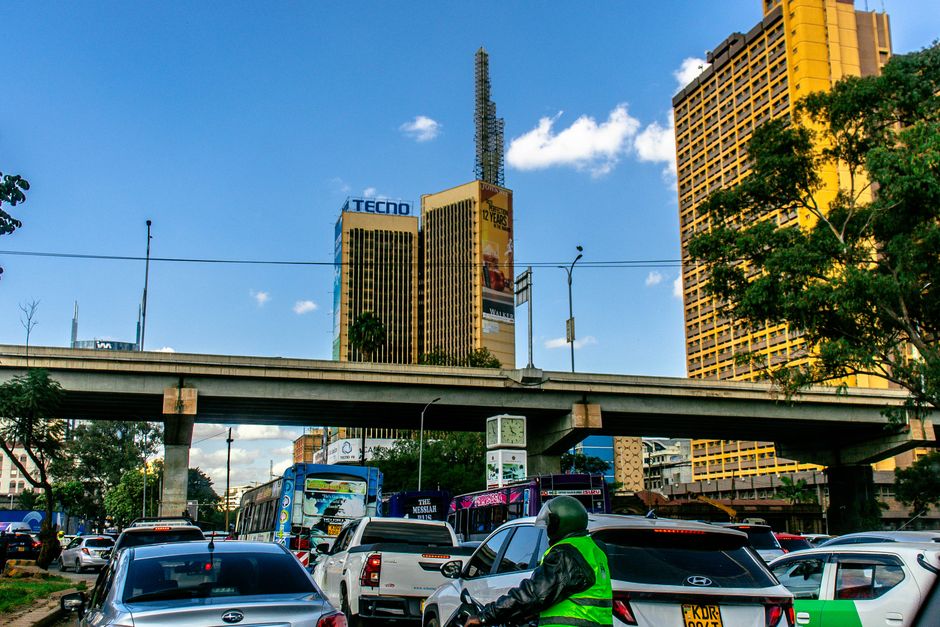
Behind the gridlock on Uhuru Highway and the erratic water supply plaguing Westlands lies a stark numerical reality: Nairobi County's June 2026 budget execution report reveals a staggering disconnect between citizen expectations and fiscal reality. According to the latest county treasury disclosures, only KES 4.2 billion of the projected KES 35 billion development budget has been deployed across the city's 17 sub-counties, leaving critical projects stranded mid-cycle.
The data tells a troubling story. Road maintenance accounts for merely 8% of actual spending despite comprising 22% of planned allocations—a 14-percentage-point gap that translates to roughly KES 2.8 billion in unfunded repairs. The Outer Ring Road, which carries an estimated 185,000 vehicles daily according to traffic monitoring data, remains studded with potholes that have spawned over 3,400 insurance claims in the past quarter alone. Meanwhile, water and sanitation infrastructure improvements lag at just 6% execution, even as the Water and Sewerage Company reports that 34% of Nairobi's piped water is lost to leakage annually—a waste valued at approximately KES 1.9 billion.
Solid waste management presents perhaps the most visible numerical failure. The Dandora and Riruta dumpsites are currently operating at 104% and 98% capacity respectively, yet refuse collection targets stand at only 62% achievement across the city. In informal settlements like Kibera and Mathare, where roughly 1.2 million residents live on less than 5% of Nairobi's land, waste collection occurs just twice monthly compared to the twice-weekly standard promised in county plans.
The revenue generation picture compounds the crisis. County Internally Generated Revenue (IGR) through property taxes, business permits, and parking fees reached only KES 8.7 billion against a target of KES 12.4 billion—a shortfall of 30%. The data suggests collection efficiency in affluent zones like Karen and Kilimani remains at 71%, while in industrial areas like Gikomba it plummets to 34%.
Youth unemployment statistics underscore why service delivery matters beyond infrastructure metrics. Official figures peg Nairobi youth unemployment at 18.4%, with underemployment affecting an additional 34% of workers aged 15-34. These demographics depend most heavily on functional public transport, clean water, and waste management—precisely the services hemorrhaging budget execution.
County officials have attributed delays to bureaucratic procurement processes and delayed national government transfers. However, the numbers suggest a deeper governance challenge: with only three months remaining in the financial year, achieving even 70% budget execution appears unlikely, perpetuating a cycle that has left Nairobi residents navigating a capital that statistically underperforms its resources.
This article was compiled by AI from the sources linked above and screened before publishing. See our editorial standards.