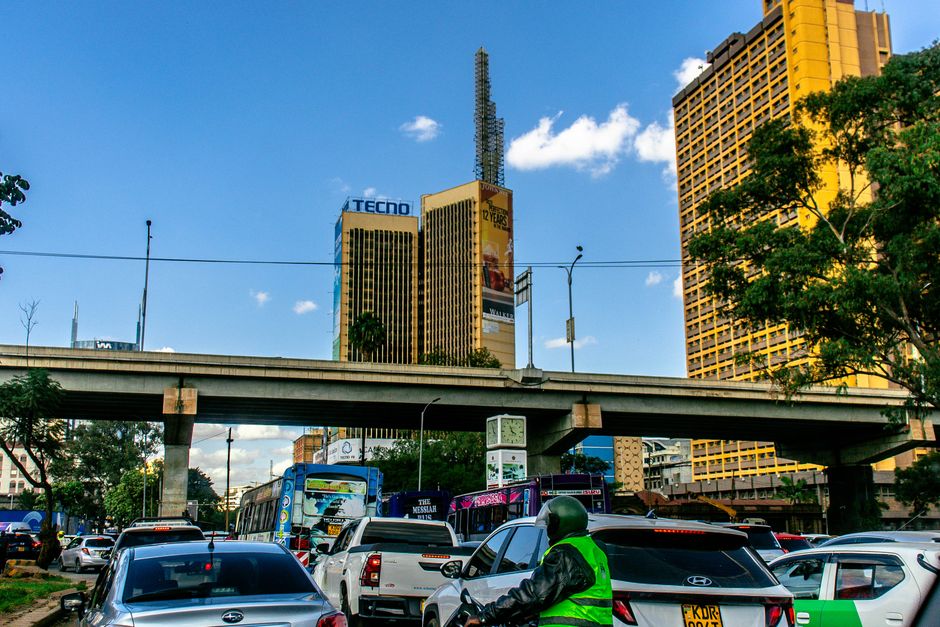
Nairobi County's administration is at a crossroads as municipalities worldwide reassess how power should be distributed between city halls and national capitals—a conversation that hits differently in a city where the devolution experiment remains contentious after more than a decade.
The Nairobi City County government, headquartered in City Hall on City Square, manages a budget of approximately 118 billion shillings annually, yet operates under constant tension with the national government over revenue allocation and jurisdictional boundaries. This structural friction mirrors—but diverges sharply from—challenges facing peer megacities like Lagos, Johannesburg, and Bangkok, where mayors command clearer autonomy but face different legitimacy questions.
"We're seeing a pattern in major African cities," explains local governance analyst perspective on the region. "Nairobi's two-tier system creates inefficiencies that Lagos and Johannesburg avoid, but it also distributes accountability in ways their more centralised models don't." The County manages services from Kibra to Westlands, yet critical infrastructure decisions—from the Nairobi Expressway to water systems—often involve multiple governmental layers.
Consider waste management on Waiyaki Way and across the sprawling informal settlements of Mathare and Dandora. Nairobi County's Sanitation Department coordinates with the Nairobi Metropolitan Services, a national entity established in 2020, creating the kind of jurisdictional overlap that doesn't plague Jakarta or Cairo to the same degree. A kilogramme of waste collection costs residents indirectly through competing bureaucracies.
Yet the devolved model has delivered targeted wins. The County's investment in upgrading Kenyatta National Hospital, alongside decentralised health clinics across Eastleigh, Kasarani, and Karen, demonstrates how localized governance can respond to neighbourhood-specific needs faster than purely centralised systems. Singapore and Copenhagen—often cited as global governance models—coordinate health and sanitation through single municipal authorities, but lack Nairobi's ability to reflect diverse ward-level priorities.
Revenue remains the persistent thorn. Nairobi County receives roughly 9 percent of national tax revenue while generating perhaps 40 percent of Kenya's GDP. Compare this to London, which controls substantial fiscal levers through City of London Corporation structures, or Seoul's metropolitan autonomy—and the disparity becomes stark.
As the 2027 general election approaches, pressure mounts for governance reform. Some advocate consolidating the County and national functions; others push for stronger fiscal devolution. Global precedents offer limited clarity: decentralisation isn't inherently superior, nor is centralisation. What works depends on institutional capacity, political will, and honest resource-sharing—precisely what Nairobi's experiment is still testing.
This article was compiled by AI from the sources linked above and screened before publishing. See our editorial standards.