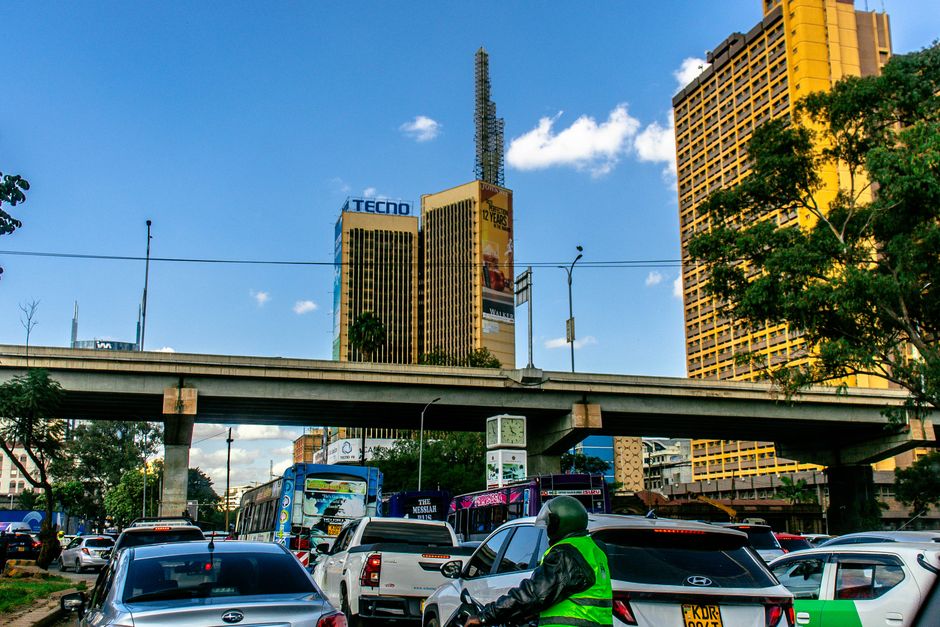
The Nairobi Expressway Phase Two extension has become impossible to ignore in Eastlands. For months, residents of Buruburu, Umoja, and Donholm have watched their daily commutes transform into endurance tests, with travel times on Valley Road and Mombasa Road nearly doubling during peak hours.
Unlike the optimistic government messaging about connectivity and economic growth, the lived experience on the ground tells a different story. Street vendors who operated along the demolition zones have scattered across the city. Small transport operators who ferried passengers through now-blocked routes report 40 to 50 percent drops in daily earnings. A matatu stage operator at Buruburu Centre, who declined to be named, described losing approximately 12,000 shillings weekly—roughly a quarter of his typical monthly income.
The promised alternative routes, residents say, have proven inadequate. Commuters attempting to bypass the construction now clog residential streets in Kariobangi and Buru Buru, creating congestion in areas never designed for such traffic volumes. Public transportation, already strained across Nairobi, has become even more unreliable, with buses and matatus taking circuitous paths that add 20 to 30 minutes to journeys that once took 15.
"They told us this was for the city's future," said one Umoja resident, a nursing assistant who spends nearly 3,000 shillings monthly on additional transport costs. "But what about our present? What about the small businesses closing because customers can't reach them?"
The Kenya National Highways Authority acknowledges the disruption is temporary, with completion targeted for 2028. Phase One of the expressway, which opened in 2022, has indeed reduced travel times on its corridor—from 45 minutes to roughly 15 minutes on the Nairobi-Westlands stretch. However, that success has not fully translated to Eastlands communities waiting for Phase Two benefits.
Environmental concerns also surface in residents' voices. Increased congestion on alternative routes has worsened air quality, with schools near Valley Road reporting respiratory complaints among students. The temporary dust from construction sites has prompted several residents to demand compensation for health impacts.
Community organisations like the Buruburu Social Welfare Association have begun documenting grievances, hoping to present a formal petition to the county government. Their core message: infrastructure development cannot succeed if it abandons the very communities it passes through.
As Nairobi continues reshaping its transport landscape, the question echoing through Eastlands remains urgent: who truly benefits from progress, and at whose cost?
This article was compiled by AI from the sources linked above and screened before publishing. See our editorial standards.