How Nairobi's Transport Crisis Built the Case for the Expressway Revolution
Decades of gridlock, failed planning, and a growing middle class finally forced the city's hand on mega-infrastructure.
Decades of gridlock, failed planning, and a growing middle class finally forced the city's hand on mega-infrastructure.
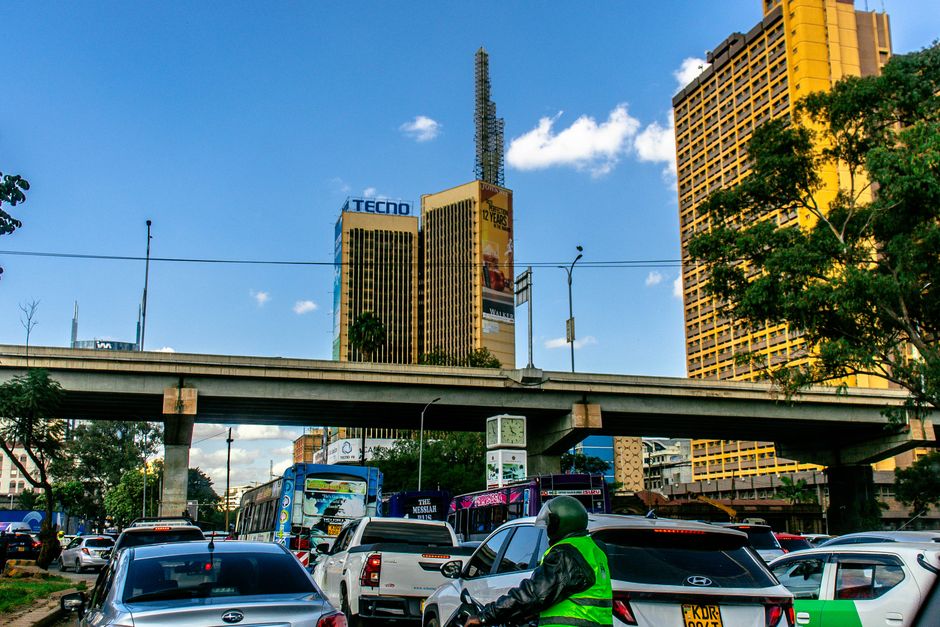
For anyone commuting from Westlands to the Industrial Area during peak hours, the numbers tell a familiar story of desperation: what should be a 15-kilometre journey routinely stretches to two hours or more. This gridlock didn't appear overnight. It is the product of three decades of deferred decisions, rapid urbanisation that outpaced planning, and a transport system designed for a city half its current size.
Nairobi's population has nearly tripled since 1995, from roughly 1.3 million to over 4.2 million today. Yet the road network expanded by barely 40 percent. The mathematical outcome was inevitable. By 2020, the World Bank estimated congestion was costing the Kenyan economy around 2.5 percent of GDP annually—roughly Sh500 billion—in lost productivity and wasted fuel.
The Thika Road project, which began in 2009 and was completed a decade later at a cost of Sh47 billion, offered an early blueprint and a cautionary tale. While the dual carriageway brought initial relief to traffic flowing north, it soon filled to capacity. The lesson was stark: incremental expansion cannot match exponential growth. Commuters on the Eastern Bypass, the Western Bypass, and the Mombasa Road found themselves repeating the same frustration within years of each upgrade.
What changed the political calculus was the emergence of Nairobi's upper-middle class. Residents in areas like Kilimani, Lavington, and Upper Hill—earning upwards of Sh200,000 monthly—began choosing between spending 10 hours weekly in traffic or relocating to Kiambu or Machakos. Property developers outside the city centre capitalised on this exodus, offering shorter commutes and lower prices. By 2023, real estate activity in satellite towns was outpacing Nairobi's central business district for the first time in the city's history.
Simultaneously, the rise of ride-hailing services and the proliferation of small-scale public transport operators created competing visions for mobility. The Nairobi Metropolitan Transport Authority, established in 2022, was tasked with coordinating a system that had become chaotic. Yet its authority was limited by fragmented governance across multiple agencies and counties.
The Nairobi Expressway, launched in 2022, represented a break with this incrementalism. At Sh63.9 billion, it was the largest infrastructure investment in the city since the SGR. But it also crystallised a deeper shift: the recognition that Nairobi's problems could not be solved by patching the existing system. They required reimagining mobility itself. The precedent has now unlocked discussions about the Outer Ring Road, elevated transit corridors, and coordinated parking management.
Twenty years of congestion, finally, had exhausted patience with half-measures.
This article was compiled by AI from the sources linked above and screened before publishing. See our editorial standards.
How does this story make you feel?
Spread the word
About this article
Published by The Daily Nairobi
Daily brief
Free, in your inbox before 7am. Weekdays.
More in News