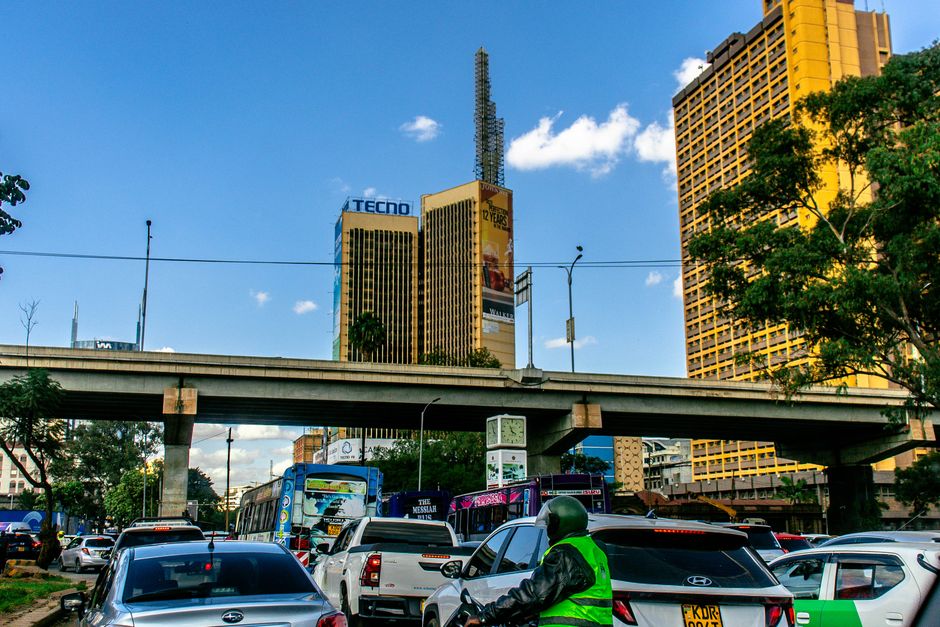
As Nairobi Expands Its Metro, How Does It Stack Up Against Global Peers?
The city's ambitious transport overhaul faces growing pains, but early comparisons with Lagos, Mumbai and Jakarta offer both cautionary tales and templates for success.
The city's ambitious transport overhaul faces growing pains, but early comparisons with Lagos, Mumbai and Jakarta offer both cautionary tales and templates for success.

Nairobi's transport ambitions are unmistakable. The Standard Gauge Railway connects the city to Mombasa, the Nairobi Metropolitan Railway Development Project promises to link suburbs to the CBD, and ongoing road rehabilitation has reshaped corridors from Thika to Mombasa Road. Yet as construction dust settles across the city, a critical question emerges: how does East Africa's largest economy actually perform against peer cities wrestling with similar infrastructure challenges?
The numbers tell a mixed story. Nairobi's metro rail project, launched in 2017, has transported over 200 million passengers to date—impressive by East African standards. Compare this to Lagos's ongoing rail initiatives, which have struggled with cost overruns and timeline delays, or Jakarta's MRT system, which took nearly two decades to reach current capacity. Nairobi's faster execution reflects leaner decision-making, though critics argue corners were cut on safety protocols and last-mile connectivity.
The real divergence emerges in integration. Mumbai's suburban rail system seamlessly connects to bus networks, reducing average commute times. Nairobi's Matatu Integrated Transport System remains fragmented, with minibus operators in Eastleands, Kahawa West, and outer Nairobi still operating independently rather than as coordinated hubs. The proposed Bus Rapid Transit corridor along Nairobi CBD offers hope, but implementation delays—now pushed to 2027—highlight local capacity constraints that rival cities like Bogotá addressed more swiftly.
Cost presents another fulcrum. The SGR's KES 327 billion price tag drew intense scrutiny, with critics comparing it unfavorably to Lagos's BRT system, built for a fraction of the cost. Yet Nairobi avoided the massive debt restructuring that paralyzed Jakarta's infrastructure budgets through the 2010s, suggesting more prudent financial management—though at the expense of ambition.
Infrastructure equity remains the starkest gap. While Westlands, Upper Hill, and central Nairobi enjoy metro connectivity, informal settlements like Kibera and Mathare remain isolated, dependent on congested matatu routes. Lagos and Mumbai, despite their own challenges, have invested more deliberately in peripheral transit. Nairobi's development pattern risks calcifying existing inequality.
The narrative isn't entirely bleak. The Nairobi City County's recent coordination with national government signals institutional learning. Pedestrian infrastructure improvements along Tom Mboya Street, real-time tracking apps for matatus, and congestion pricing pilots show adaptation. Yet without addressing the integration gap—and ensuring poorer suburbs benefit equally—Nairobi risks building an infrastructure network that serves the wealthy while leaving millions stranded in the slow lanes. That's a lesson other cities learned too late.
This article was compiled by AI from the sources linked above and screened before publishing. See our editorial standards.
How does this story make you feel?
Spread the word
About this article
Published by The Daily Nairobi
Daily brief
Free, in your inbox before 7am. Weekdays.
More in News