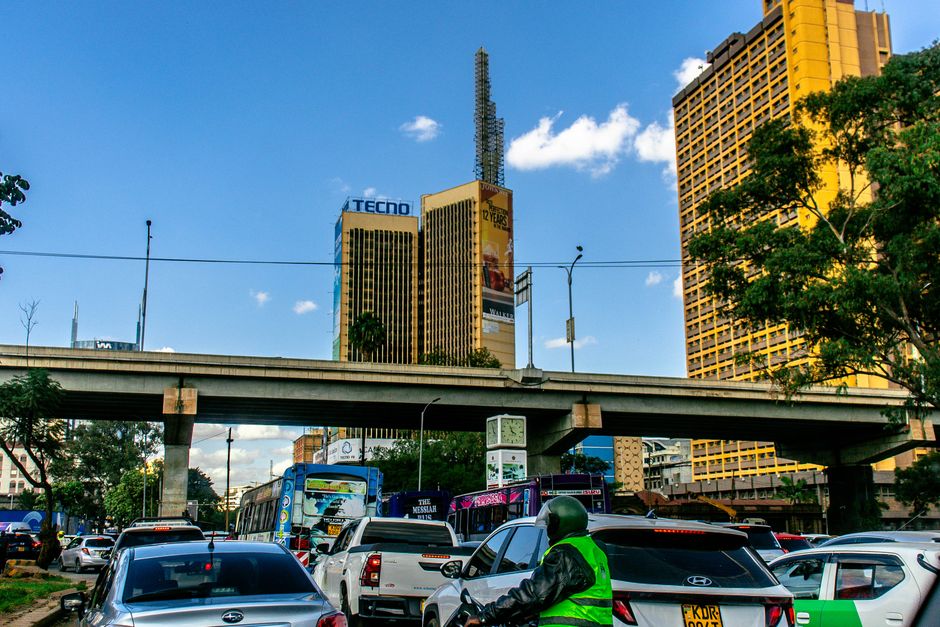
Nairobi climbed to the top tier of a 47-city comparative index published Monday by UN-Habitat, scoring 74 out of 100 on its Urban Migration Resilience Index — outperforming Johannesburg at 61, Dhaka at 58, and Athens at 55. The report, released from UN-Habitat's headquarters on United Nations Avenue in Gigiri, credits Kenya's capital with maintaining measurably lower rates of migrant-linked social conflict than peer cities of comparable size and economic stress.
The timing matters. With Venezuela's earthquake death toll still rising, a heatwave killing more than 2,000 people in France last month, and political instability from Eastern Europe to West Africa pushing displacement figures upward globally, cities everywhere are absorbing new populations under pressure. Nairobi has taken in an estimated 87,000 new internal migrants from drought-affected counties in the Rift Valley and Coast regions in the first six months of 2026 alone, according to the Kenya National Bureau of Statistics mid-year estimate released in late June.
What Drove the High Score
UN-Habitat's researchers pointed to three specific programmes. The Mukuru Integrated Development Plan, covering the Mukuru kwa Njenga and Mukuru kwa Reuben settlements in Embakasi South, has since 2023 formalised land tenure for roughly 34,000 households, giving new arrivals a documented address that unlocks access to county services — a step Athens, for instance, has never managed for its Moria-era migrants. The Nairobi Metropolitan Services commuter rail expansion, which added the Ruiru–Nairobi Central and Syokimau corridor upgrades last year, has reduced the cost of a daily commute from Eastlands to the Central Business District from Ksh 120 by matatu to Ksh 50 by train, making longer-distance settlement more viable for lower-income arrivals.
The Konza Technopolis Authority and the Silicon Savannah corridor along Thika Superhighway have also played a role the index did not fully anticipate. Tech-sector employment, which grew by 14 percent in Nairobi County between January and June 2026 according to the Kenya ICT Authority's quarterly figures, has absorbed a significant share of educated internal migrants from secondary cities like Kisumu and Nakuru who might otherwise be economically idle. Idle young men, the UN-Habitat report notes bluntly, correlate with social friction in migration-receiving cities worldwide.
That is not to say the picture is uniformly good. Mathare North and Korogocho still lack functional waste and water infrastructure despite repeated City County of Nairobi budget allocations — the 2025/2026 county budget set aside Ksh 1.4 billion for informal settlement upgrading but disbursed only 60 percent of that by the financial year's close on June 30. Officials at Nairobi City Hall on City Hall Way declined to give a revised disbursement schedule this week.
What Comes Next
UN-Habitat will present the full index findings at a regional urban policy forum in Addis Ababa on July 14, where Kenya is expected to send a delegation from the State Department for Housing and Urban Development. The William Ruto administration, which has been managing IMF-linked fiscal constraints since the 2024 austerity framework, is keen to use the ranking as evidence that social cohesion has not been sacrificed under budget pressure — a politically useful argument ahead of the 2027 electoral cycle.
Practically, the index recommends that Nairobi push the Kenya Railways Corporation to accelerate the Ngong Road light rail feasibility study, stalled since February, which would open the Kibera corridor to the same commuter savings already benefiting Eastlands residents. It also calls on the Nairobi County government to extend the Mukuru model to Mathare by December 2026, with formal tenure documentation as the first milestone. Whether City Hall has the budget headroom for that is the question officials on Harambee Avenue are not yet ready to answer publicly.