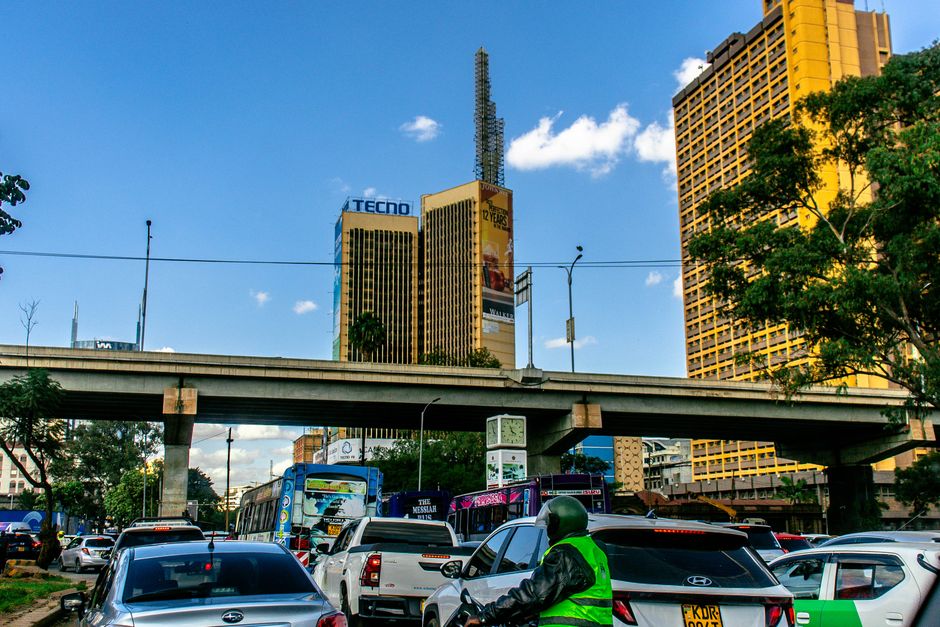
Nairobi's transport network is in formal crisis. The Kenya National Highways Authority confirmed last month that average peak-hour speeds on key arterials including Mombasa Road and Waiyaki Way have dropped below 8 kilometres per hour — roughly the pace of a brisk walk — costing the city an estimated Ksh 50 billion annually in lost productivity, according to a 2025 World Bank urban mobility assessment. The Ruto administration has now committed Ksh 142 billion toward a metro-wide infrastructure overhaul, with construction phases beginning in the second quarter of 2027. The question many commuters and city planners are asking is how things got this bad in the first place.
The answer requires going back roughly twelve years. When the Thika Superhighway opened in 2012 — financed partly by a Chinese Exim Bank loan — it was marketed as a permanent fix for the northern corridor. Instead, the eight-lane road filled up within eighteen months. No corresponding investment followed in feeder roads, bus terminals, or rail. The 2013 devolution of planning functions to Nairobi City County created a jurisdictional tangle between the county, the Kenya Urban Roads Authority, and the national government that still has not been fully resolved. Zoning decisions made through the early 2010s allowed commercial sprawl along Ngong Road and Jogoo Road without any accompanying traffic impact studies, and the informal matatu sector — operating roughly 22,000 vehicles across Nairobi by 2020 — was left to self-organise around a network of termini that had not been redesigned since the 1980s.
The Projects That Never Came
Several interventions were promised and then quietly shelved. The Nairobi Bus Rapid Transit project, gazetted in 2016 under the Jubilee government, identified five corridors including the Outering Road route between Eastleigh and Embakasi. Dedicated BRT lanes were surveyed. Buses were discussed. Funding fell apart after the 2017 election crisis and was never reconstituted. The Nairobi Metropolitan Services, the agency that briefly controlled city functions between 2020 and 2022 under a direct national government arrangement, drafted an updated Integrated Urban Development Master Plan but transferred responsibility back to the county before implementation began. That plan has since been revised twice without a final approved version being published.
The commuter rail network — operated by Kenya Railways Corporation along six lines radiating from Nairobi Central Station — carried fewer than 14,000 daily passengers as recently as 2022, a fraction of its operational capacity. The Nairobi Metro Commuter Rail programme, relaunched in 2023 with refurbished diesel multiple units on the Syokimau line, has pushed that figure to roughly 55,000 daily boardings by mid-2026, according to Kenya Railways figures. That is progress. But the Kisumu Road and Ruiru lines remain unreliable, and the planned park-and-ride facility at Imara Daima has been stalled since groundbreaking in March 2024.
Where the Overhaul Stands Today
The current infrastructure package, announced by the State Department for Infrastructure in May 2026, targets four priorities: the decongestion of the Central Business District through a new one-way road grid around Tom Mboya Street and River Road; grade-separated interchanges at the Mlolongo junction on Mombasa Road and at the Westlands roundabout; expansion of the commuter rail Syokimau-CBD corridor to double-track operation; and the long-overdue formalisation of fifteen matatu termini, including the chaotic Globe Cinema roundabout terminus, under the Nairobi Non-Motorised Transport Policy framework adopted in 2021.
Financing is the persistent risk. The Ruto government is operating under an IMF programme that caps infrastructure borrowing, and the Gen Z-driven tax revolt of 2024 effectively killed the Finance Bill that would have created a dedicated urban transport levy. Treasury officials have indicated that roughly Ksh 38 billion of the package depends on blended financing from the African Development Bank, with a loan agreement expected to be signed before December 2026. If that deadline slips, the Mlolongo interchange — the most congested single point on Mombasa Road, where freight trucks from the port queue for hours — will wait yet again. Commuters on the 40-kilometre stretch between the CBD and Athi River, many of whom spend three hours in traffic each day, have heard promises before. The difference this time, planners say, is that the political cost of inaction has finally become too high to ignore.