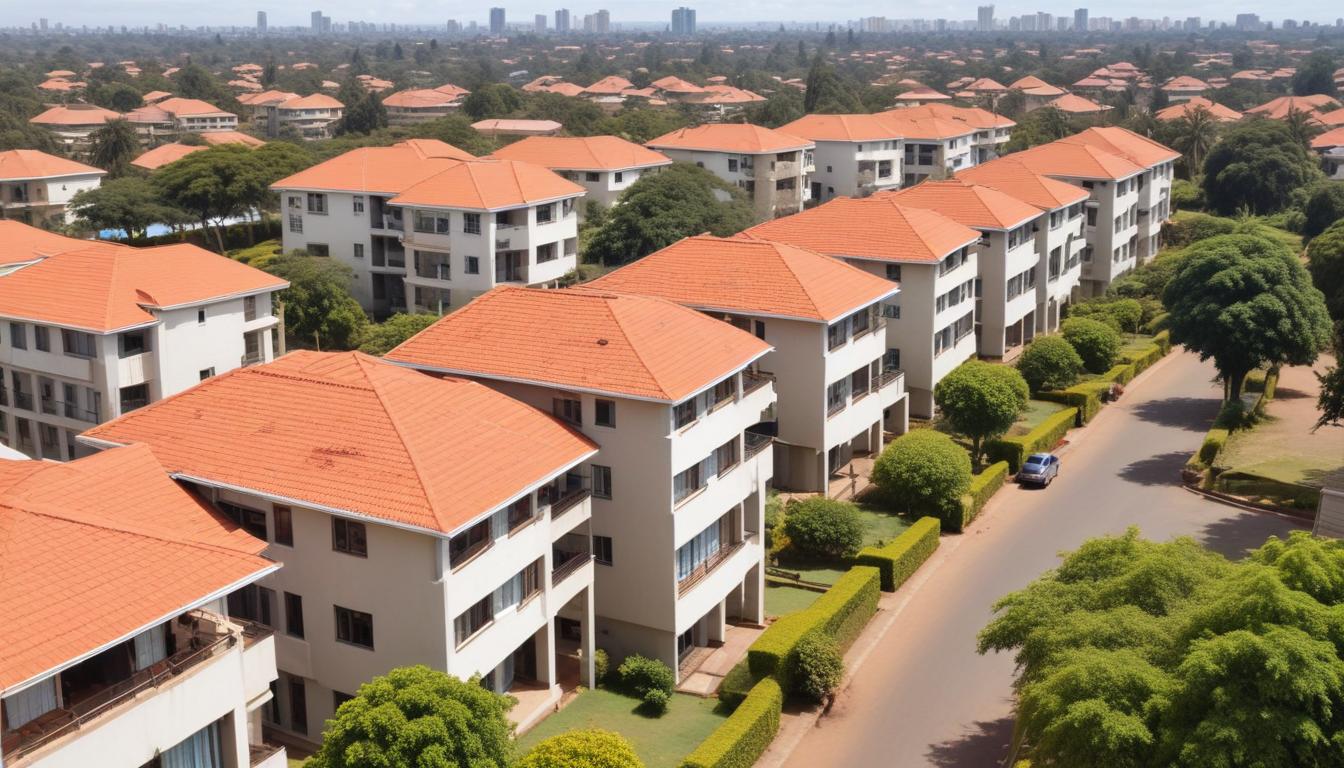
For years, Kilimani remained the neighbourhood investors drove through on their way to Westlands or Lavington. Today, it is quietly becoming one of Nairobi's most compelling rental markets—a shift driven by deliberate urban planning, young professional migration, and yields that still make financial sense.
The data tells a story worth heeding. While Westlands commands premiums averaging KES 18M–22M for comparable apartments, Kilimani entry points hover between KES 12M–16M. Yet rental rates have compressed the gap: a two-bedroom in Kilimani now commands KES 80,000–120,000 monthly, delivering gross yields of 7–10 percent—substantially above the broader Nairobi average of 5–6 percent. For buy-to-let investors, the mathematics are increasingly favourable.
Location amplifies the appeal. Kilimani's proximity to Nairobi's emerging business corridors—particularly along Forest Road and towards the Upper Hill cluster—has accelerated professional inflows. The recent completion of improved arterial roads and the proposed extension of the Green Line Mass Transit route through adjacent areas have sharpened investor focus. Close access to shopping at The Hub and dining strips along Gitanga Road adds lifestyle weight that sustains tenant demand.
Property managers familiar with the zone report elevated occupancy rates. Unlike segments of Kileleshwa still absorbed in price discovery, or growth corridors like Syokimau where tenants remain spread thinly, Kilimani has achieved critical mass: young families, expats, and transient professionals compete for units, keeping vacancy rates below 8 percent across most developments. Institutional landlords operating apartment blocks have noticed; several have announced fresh construction plans for mid-range residential offerings targeted at the KES 200,000–250,000 rental bracket.
Prudent investors, however, must navigate structural realities. Kilimani's attraction rests heavily on finish quality and amenities. Units offering co-working spaces, secure parking, and reliable power backup command premiums and retain tenants. The neighbourhood's water challenges—periodic shortages affecting some zones—remain a risk factor that impacts both rents and property values. Due diligence on individual schemes remains non-negotiable.
Building regulations and property compliance enforcement have also tightened, raising construction and maintenance costs. Investors must factor ongoing compliance with Nairobi City County standards into yield projections.
Yet for capital-constrained investors seeking exposure to Nairobi's rental market without the premium pricing of Lavington or the unproven infrastructure bets of distant growth zones, Kilimani has shed its wallflower status. It is no longer the neighbourhood to pass through—it is increasingly the one to stop in.
This article was compiled by AI from the sources linked above and screened before publishing. See our editorial standards.