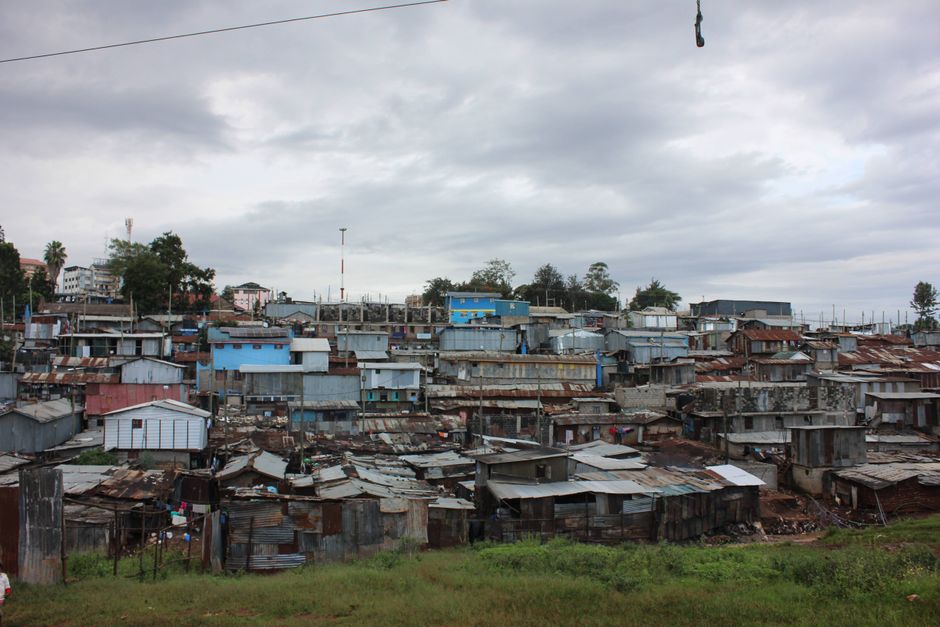
A two-bedroom apartment in Ruaka rents for between KES 25,000 and KES 35,000 a month. The same unit in Westlands starts at KES 65,000 and climbs past KES 90,000 without breaking a sweat. That gap — roughly 50 to 60 percent — has made Nairobi's growth corridors magnets for middle-income tenants. Now a wave of new development projects along those corridors is changing the calculus for anyone considering a purchase.
The timing matters because several large-scale residential schemes are approaching completion simultaneously. Along Limuru Road, developers including Optiven Group and a handful of smaller firms registered under the Nairobi County Business Register have added more than 1,200 units in the past 18 months. In Syokimau, near the Standard Gauge Railway station on Mombasa Road, similar numbers are going up. That supply surge is welcome for renters seeking relief from Nairobi's core. For buyers, it is a more complicated story.
What the New Supply Actually Means on the Ground
Syokimau is instructive. The SGR terminus at Syokimau station made the area genuinely viable for commuters working in the Central Business District, cutting travel time to around 20 minutes on a good morning. That infrastructure boost triggered a construction frenzy between 2022 and 2025. Hass Consult's quarterly property index, which tracks asking prices across Greater Nairobi, recorded a 12 percent appreciation in Syokimau land values between January 2023 and December 2024. Developers noticed. By mid-2025, several studio-and-one-bedroom blocks had finished, and occupancy was running at roughly 70 percent — healthy, though not the full houses some projections promised.
The problem is what happens when 15 developers finish projects in the same six-month window. Vacancy rates in Ruaka crept above 20 percent in the first quarter of 2026, according to data circulated by the Kenya Property Developers Association. Landlords in Muchatha and along the Kiambu Road stretch near the Northern Bypass began offering one to two months' rent-free as an incentive — something almost unheard of in those areas three years ago. That is good for renters. For a buyer who purchased off-plan in 2023 expecting 8 percent annual rental yields, the current arithmetic is painful.
Kilimani and Kileleshwa, closer to Nairobi's core, have not experienced the same oversupply pressure. Asking prices there average KES 12 million to KES 18 million for a standard two-bedroom unit, well within the city's overall average of KES 15 million. Occupancy runs higher, rents hold firmer, and the secondary resale market moves, if slowly. The trade-off is that entry costs are prohibitive for most first-time buyers, and mortgage penetration in Kenya remains below 3 percent of GDP — one of the lowest ratios among comparable African economies.
Where Buyers Should Focus Their Due Diligence
Projects with genuine infrastructure anchors are performing differently from those built on speculation alone. A development abutting the Nairobi Expressway interchange at Mlolongo has reported faster uptake than comparable units further off the main corridor, according to agents at Knight Frank Kenya's Nairobi office. The principle translates elsewhere: proximity to a functioning school, a hospital, or a reliable water connection separates a viable purchase from a five-year headache.
The National Housing Corporation's affordable housing programme, now tied to the government's broader Affordable Housing Levy introduced in 2023, is also directing units toward Shauri Moyo and Park Road in Nairobi's eastern belt. Prices there are being pitched at KES 1.5 million to KES 3 million per unit under subsidised terms. Independent surveyors caution that title deed clarity in some of those parcels is still working through the land registry, and buyers should insist on a search at Ardhi House on Ngong Road before committing any deposit.
The practical upshot for someone weighing rent-versus-buy along Nairobi's fringes: if a new project sits within 2 kilometres of confirmed infrastructure — an SGR stop, a completed expressway ramp, an operational water connection — and the developer can show a clean title and a certificate of occupancy, the numbers can work over a seven-to-ten-year horizon. If the pitch relies on projected infrastructure that is still on a county planning map, the rental deal next door is probably the smarter bet for now.