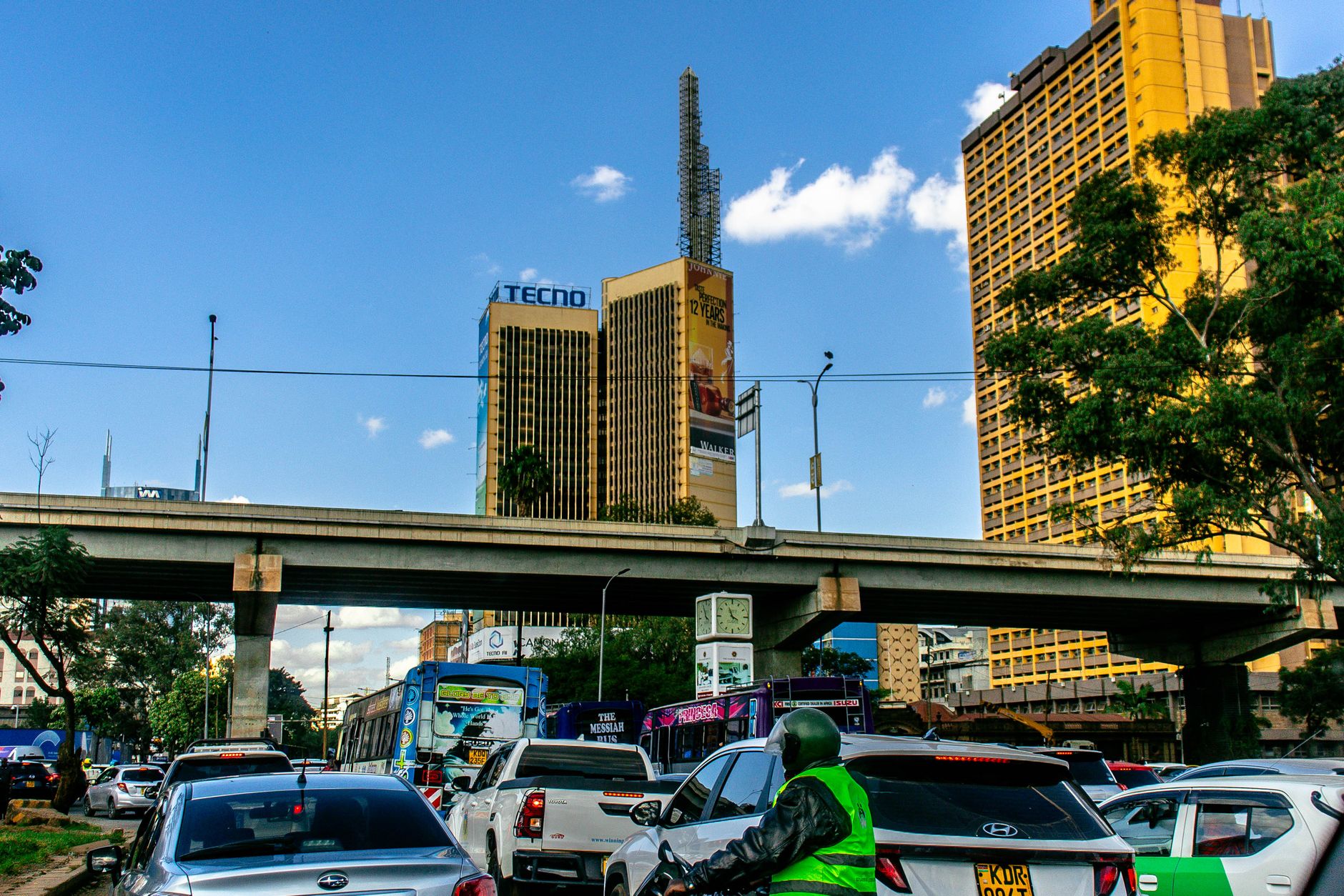
Nairobi's commercial property market is experiencing a pronounced contraction in demand from multinational firms, a direct consequence of the volatile geopolitical environment unfolding across the Middle East, South Asia, and beyond. Over the past eighteen months, several Fortune 500 companies have scaled back their regional operations or consolidated office space across Upper Hill, Westlands, and the central business district, leaving prime real estate increasingly vacant and rental negotiations tilting sharply in tenants' favour.
The shift reflects a broader pattern: as global supply chains fracture, trade tensions simmer between major powers, and emerging markets face capital flight, international corporations are recalibrating their footprints. Companies that once viewed Nairobi as an essential hub for East and Central African operations are now questioning whether maintaining full-service offices in premium locations—where Grade A space on Waiyaki Way commands between Sh800 and Sh1,200 per square metre monthly—remains justified.
"The calculus has changed," explains one property consultant at a major Nairobi firm, requesting anonymity. "When uncertainty spikes globally, regional headquarters budgets get cut first. We're seeing multinationals reduce from four floors to two, or relocate to more affordable sub-markets like Kilimani and Lavington."
Real estate data from the past quarter shows CBD office absorption rates hovering below historical averages, with landlords increasingly offering rent-free periods and fit-out contributions to secure long-term tenants. Buildings along Mama Ngina Street and around the Standard Street precinct have experienced tenant churn, with occupancy rates dipping to approximately 78 percent—down from 85 percent three years ago.
Local firms and regional players, however, are exploiting the opportunity. Kenyan financial services companies, tech startups, and pan-African enterprises are negotiating better terms for expansion. East Africa's comparative stability and Nairobi's role as a continental business centre remain assets, but they're no longer commanding the premium pricing multinationals once paid.
The International Monetary Fund's recent downgrade of global growth forecasts, coupled with ongoing trade disputes and regional tensions, suggests this trend will persist through 2026. Property developers are responding by diversifying portfolios—emphasising co-working spaces, flexible lease terms, and mixed-use developments that cater to smaller, agile tenants rather than banking on single large corporate anchors.
For Nairobi's property sector, the message is clear: the era of guaranteed demand from international corporations is ebbing. Long-term success will depend on attracting and retaining dynamic local and regional players—a fundamentally different business than the last decade.
This article was compiled by AI from the sources linked above and screened before publishing. See our editorial standards.