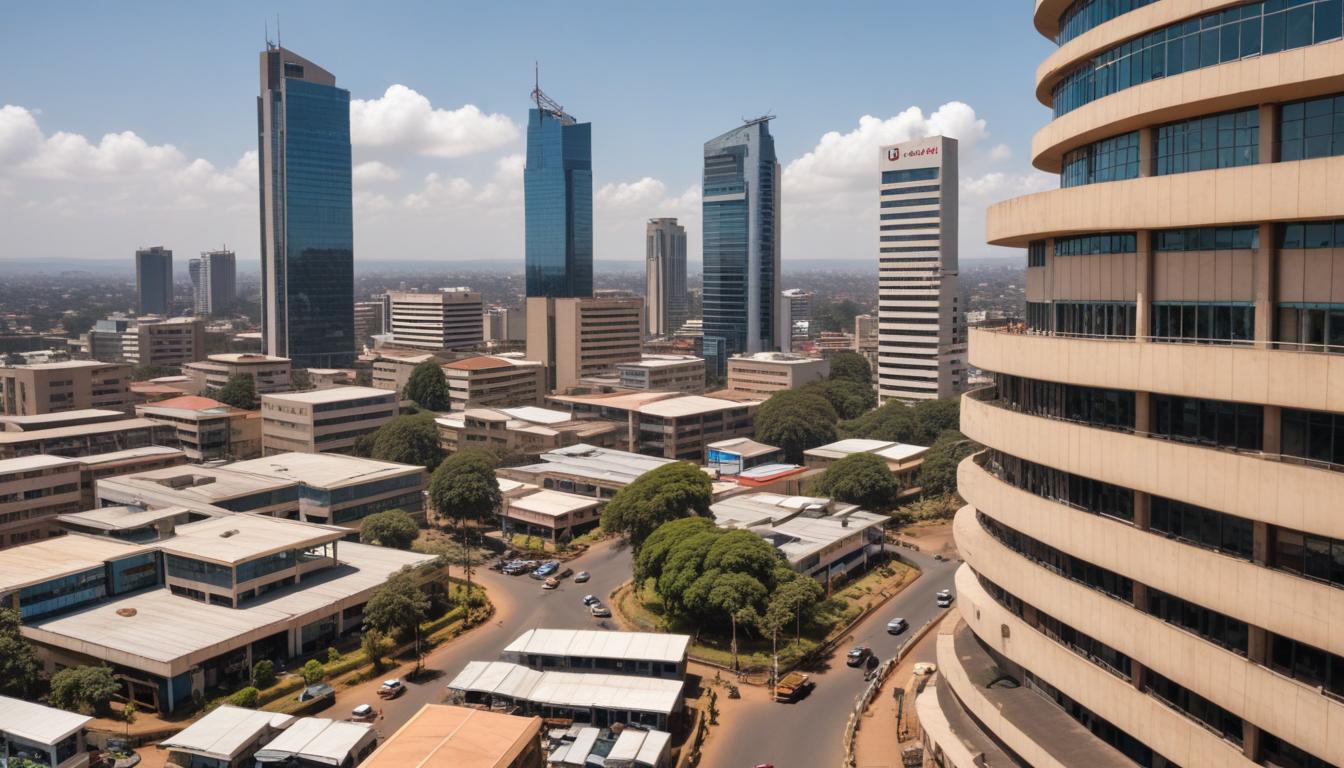
Nairobi's commercial property landscape is undergoing a quiet but seismic shift. Traditional office towers along Uhuru Highway and in the Nairobi Central Business District, once the prestige addresses for multinational firms, are facing unprecedented vacancy rates—some hovering above 15 percent. Simultaneously, flexible workspace operators are expanding rapidly in Westlands, Kilimani, and the burgeoning tech hubs around Upper Hill and Iko Poa's innovation districts.
The trend is reshaping how companies recruit and retain talent in ways that extend far beyond real estate. "We're seeing a fundamental decoupling of where work happens and where talent lives," explains the dynamics affecting local HR strategies. Premium office space in the CBD that once commanded 35,000 to 45,000 shillings per square metre monthly now competes with serviced offices in Westlands charging 15,000 to 25,000 shillings, complete with flexibility.
This fragmentation is redrawing Nairobi's talent map. Previously, job seekers clustered their applications around CBD landmarks—the Finance House, Nation Centre, and Upperhill's corporate parks. Now, they're equally likely to pursue roles in Gigiri's tech incubators, Kilimani's co-working spaces, or even fully remote positions. Companies report that their recruitment zones have expanded geographically but compressed temporally; candidates now expect flexible location policies as table-stakes.
The impact on compensation is tangible. With overhead costs falling, mid-sized firms and startups can now offer competitive salaries without the burden of long-term office leases. A software engineer who might have commanded 180,000 shillings monthly in 2023 now finds similar roles across five neighbourhoods, intensifying competition for talent and forcing established firms to justify premium salaries through non-traditional benefits—professional development budgets, health insurance, and genuine hybrid arrangements.
Meanwhile, property developers are pivoting. Large commercial landlords along Mombasa Road and in Parklands are repurposing spaces into mixed-use developments, blending offices with hospitality and wellness amenities—a bet that companies will return, but only if locations offer more than four walls. Realizing this, some firms are clustering around Google's new East Africa hub in Nairobi and the expanding venture capital presence in Upper Hill, seeking ecosystem benefits that traditional offices cannot match.
The broader implication is that Nairobi's job market is becoming simultaneously more distributed and more competitive. For employers, the talent pool has widened but so have expectations. For workers, opportunity is less geographically tethered but demands greater self-direction. The city's economic centre of gravity, long anchored to the CBD, is fragmenting across multiple nodes—and that fragmentation may ultimately prove Nairobi's greatest asset.
This article was compiled by AI from the sources linked above and screened before publishing. See our editorial standards.