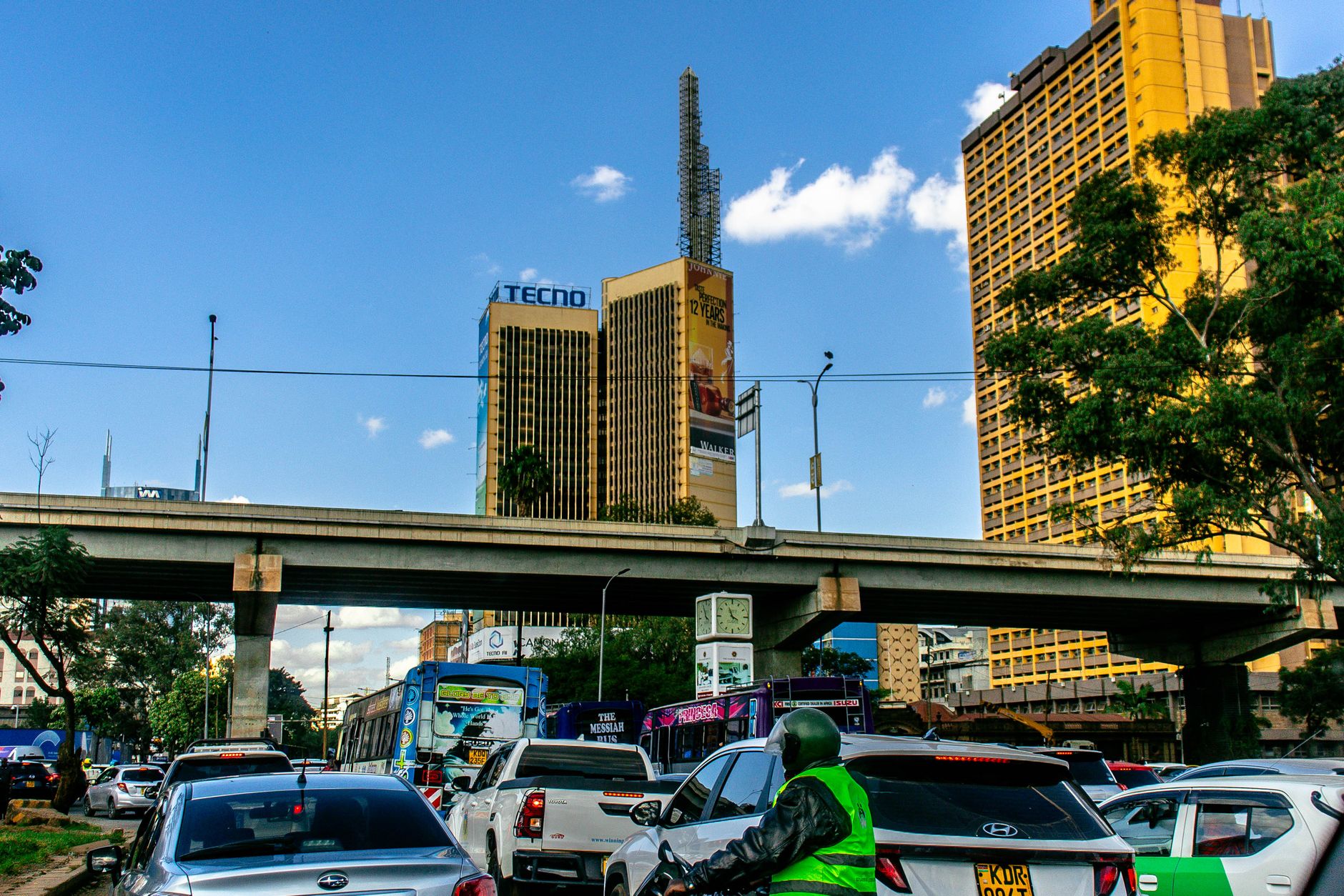
The 5 p.m. exodus from Nairobi's Central Business District has quietly created a multi-billion-shilling opportunity, and the winners are increasingly those who've cracked the formula of speed without sacrificing margins.
Data from the Kenya National Bureau of Statistics, tracking foot traffic patterns through 2025-2026, shows commuters are spending an average of 48 minutes trapped between the CBD and residential suburbs like Kilimani, Westlands, and Upper Hill. That congestion has fundamentally shifted where Nairobi's middle class—earning between 200,000 and 800,000 shillings monthly—chooses to eat.
The shift is most visible along Waiyaki Way's business corridor and the Limuru Road cluster, where quick-service restaurants (QSRs) are capturing demand that traditional sit-down establishments cannot. Locally operated chains have begun proliferating in these zones over the past eighteen months, capitalizing on commuters willing to spend 800 to 1,500 shillings on a quality meal they can consume in under twenty minutes—either before boarding matatus or in their vehicles.
"The middle income earner isn't choosing between a 300-shilling street meal and fine dining anymore," says the retail advisory division at one leading property firm tracking Nairobi's commercial expansion. "They're choosing efficiency and consistency at a price point that reflects their time scarcity."
Westlands' mixed-use developments—particularly those within a 500-meter radius of major commuter chokepoints—report occupancy rates climbing to 89 percent, with QSR tenants willing to pay premium rents of 200,000 to 350,000 shillings monthly for compact 60-80 square meter spaces. Traditional restaurants in the same areas report stagnation, with rents for larger footprints declining as landlords chase the higher-velocity, smaller-format operators.
Upper Hill's tech-driven demographic has proven especially receptive to platforms integrating delivery with in-person quick service. Venues positioned within walking distance of office parks report transaction volumes up 34 percent year-on-year, with average check sizes holding steady despite increased frequency.
The immediate winners are operators who've invested in kitchen efficiency—modular prep stations, streamlined menus, and integration with mobile payment systems. Established players with multiple locations and supply-chain discipline are expanding faster than independent restaurants. Yet gaps remain for niche operators targeting specific commute corridors or dietary preferences, particularly along the Thika Road extension toward Ruiru and Kiambu.
As Nairobi's real estate market continues repricing around commute patterns and time poverty, the retail food sector's future belongs to those who've learned to serve the city's harried middle class—fast, affordable, and consistent.
This article was compiled by AI from the sources linked above and screened before publishing. See our editorial standards.