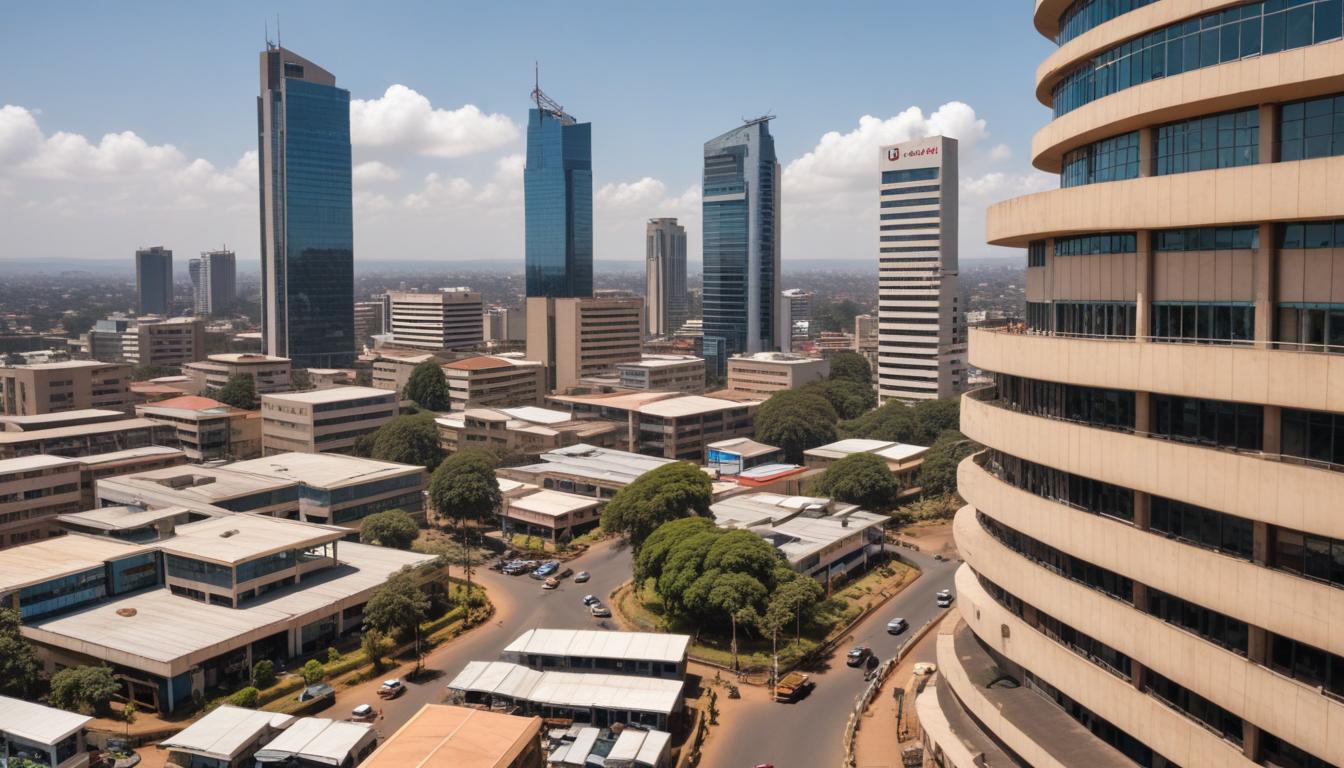
On Mama Ngina Street, where Kenya's financial district pulses with daily transactions, business leaders are watching Middle Eastern developments and Latin American turmoil with growing anxiety. The escalating tensions between the U.S. and Iran, combined with instability in Venezuela, are reshaping how Nairobi's trading community operates—and cutting into margins across multiple sectors.
For logistics firms operating from the Industrial Area and Mombasa Road, the calculus has shifted dramatically. "Shipping costs have spiked by 18-22 percent in the last two months," explains an operations manager at one of Nairobi's largest import-export hubs, speaking on condition of anonymity. "Every geopolitical flare-up near the Strait of Hormuz sends freight rates climbing. We're paying more to move the same goods."
The impact cascades through Nairobi's business ecosystem. Manufacturers in Nairobi's Industrial Area who source raw materials from global markets face compressed profit margins. Retailers in Westlands and the CBD are absorbing higher acquisition costs or passing them to consumers—with 2026 inflation already running at 5.7 percent, many customers are pushing back. Small and medium enterprises, already operating on thin margins, are most vulnerable.
Currency volatility adds another layer of complexity. The Kenyan shilling has weakened against the dollar and euro as investors flee emerging markets amid global uncertainty. For businesses with dollar-denominated debts or import invoices, this erosion cuts directly into profitability. "Our suppliers in Germany and Turkey are demanding payment terms we can't sustain," one Nairobi-based manufacturing director noted recently.
The ripple effects extend to less obvious sectors. Tourism operators report cautious bookings from North America and Europe as travellers reassess international travel plans. Even the technology and business process outsourcing firms clustered around Nairobi's Westlands and Upper Hill neighbourhoods—typically insulated from commodity shocks—are seeing clients delay projects and renegotiate contracts.
Some businesses are adapting. Forward-thinking importers are locking in long-term supply contracts and diversifying sourcing away from geopolitically sensitive regions. Companies are negotiating local currency payments where possible and exploring hedging strategies through the Nairobi Securities Exchange.
The broader lesson is unavoidable: Nairobi's business community, however locally focused it may appear, operates within a fragile global system. When Venezuela's infrastructure collapses or Iran's oil supplies tighten, the shockwaves reach offices in Upperhill and warehouses in the Industrial Area within weeks. Smart businesses are no longer treating international stability as someone else's problem—it's directly their bottom line.
This article was compiled by AI from the sources linked above and screened before publishing. See our editorial standards.