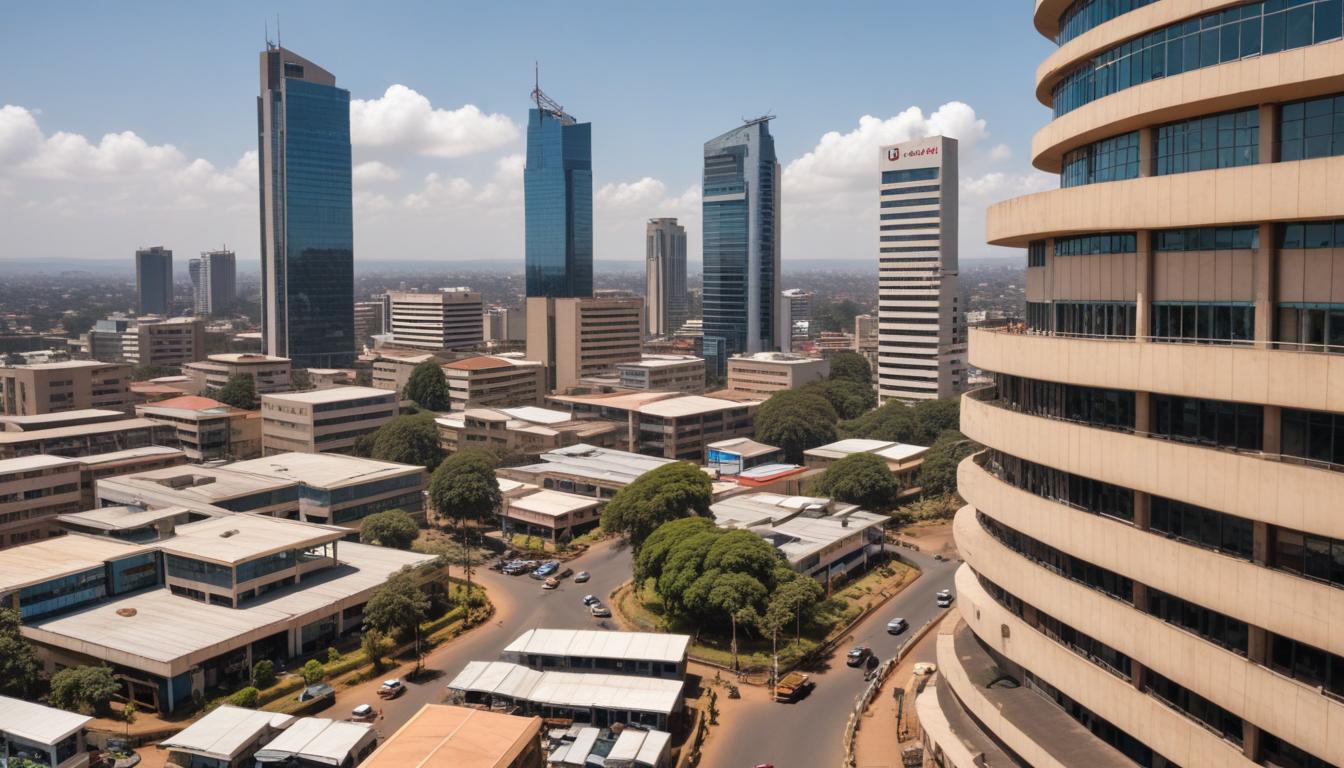
Why Nairobi's Office Boom Matters to You—Even If You Never Step Foot in Westlands
A reshaping of commercial real estate is driving up rents, changing commute patterns, and reshuffling where businesses—and jobs—actually cluster in the city.
A reshaping of commercial real estate is driving up rents, changing commute patterns, and reshuffling where businesses—and jobs—actually cluster in the city.
If you've noticed your favorite café in town suddenly has a construction site next door, or heard friends complain about commutes shifting to new business districts, you're witnessing a fundamental reconfiguration of Nairobi's commercial spine. The office and commercial property market isn't just about glass towers and corporate deals—it's reshaping everyday life for residents across the city.
Westlands has long dominated Nairobi's commercial narrative, with premium office space commanding upwards of KES 2,500 per square meter annually. But that monopoly is fracturing. Riverside, Upper Hill, and increasingly, sections of South C and Kilimani are emerging as secondary but serious hubs, with asking rents 20-30% lower than Westlands. For businesses and their employees, this dispersal means shorter commutes for some, longer ones for others—and it's already affecting traffic patterns on Valley Road and the Nairobi-Mombasa corridor.
What should everyday residents care about? First, your neighborhood may be changing. Areas historically residential—like parts of Kilimani and South C—are now attracting mixed-use developments combining retail, offices, and apartments. This can mean more amenities but also increased congestion and parking pressure. The conversion of older residential buildings into co-working spaces has accelerated since 2024, reflecting how companies now prefer flexibility over long-term leases.
Second, job accessibility is shifting. If your employer moves from Nairobi CBD to Riverside to cut real estate costs, your commute transforms. Public transport networks haven't kept pace with these dispersed office locations, leaving many workers dependent on private vehicles or ride-hailing apps—directly affecting your transport costs and time.
Third, rental prices ripple outward. As commercial developers snap up plots in previously affordable neighborhoods near emerging office clusters, residential landlords capitalize. Rents in areas like Lavington and Kilimani, increasingly attractive due to proximity to new business hubs, have risen 12-15% year-on-year since 2023.
The property market is also signaling where Nairobi's growth vector points. Investment in commercial space in areas like Nairobi's tech corridor around the University Way and beyond suggests tech companies, fintech firms, and creative industries see futures outside traditional CBD strongholds. This isn't merely real estate chatter—it indicates where jobs are consolidating.
Understanding these shifts helps residents make smarter decisions: where to rent, which neighborhoods offer future value, and how to navigate a city whose commercial geography is no longer centered on a single downtown. Nairobi's commercial real estate isn't abstract—it's quite literally reshaping your commute and your neighborhood.
This article was compiled by AI from the sources linked above and screened before publishing. See our editorial standards.
How does this story make you feel?
Spread the word
About this article
Published by The Daily Nairobi
Daily brief
Free, in your inbox before 7am. Weekdays.
More in Business