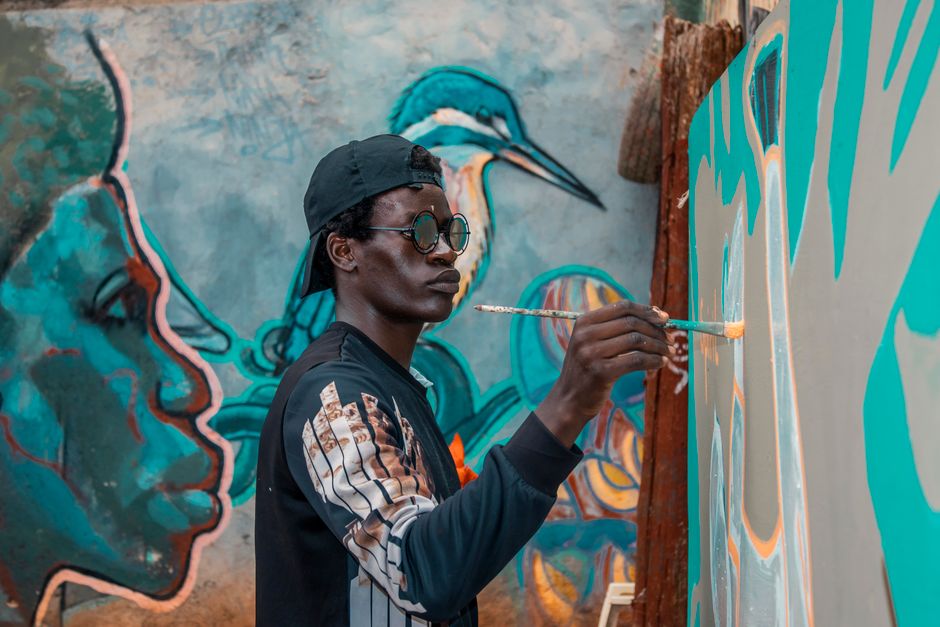
Walk through the industrial sprawl of Kamukunji on a Saturday morning, and you'll encounter something that would have seemed unthinkable a decade ago: a neighbourhood where municipal authorities, property owners, and street artists collaborate on public canvases. The transformation isn't accidental. It's the result of a deliberate shift in how Nairobi's creative class—and its city planners—now view street art not as vandalism, but as vital cultural infrastructure.
The shift has been most visible along the Eastlands corridor, where neighbourhoods like Kayole and Kariobangi have become unlikely hotspots for established and emerging muralists. What began as unauthorised interventions has evolved into sanctioned public art projects, with organisations like the Nairobi Design Foundation and independent collectives actively commissioning works on building facades. A 2024 survey by the Kenya Arts and Cultural Alliance noted that over 340 significant murals now dot the city's east side alone—a 180% increase from 2019.
But the real catalyst for identity-making has been Westlands, particularly the emerging gallery district around Ngong Road. Here, independent galleries and artist-run spaces have begun spilling their curatorial vision onto the streets themselves. What was once purely commercial retail space now functions as extended exhibition areas. Young Kenyan artists are experimenting with materials ranging from traditional spray paint to recycled plastics and industrial waste—work that speaks directly to Nairobi's relationship with urbanisation and resource scarcity.
The economic implications matter too. Commercial property developers, once hostile to street art, now recognise it as a draw. Some residential projects in areas like Kilimani now budget specifically for mural installations. Meanwhile, the street art economy itself has professionalised: seasoned muralists now command rates between KES 150,000 and 500,000 per large-scale installation, creating sustainable income streams previously unavailable to visual artists outside gallery systems.
What makes this moment distinctly Nairobi is the content itself. Unlike street art in other global cities that often prioritises aesthetics, murals here increasingly grapple with local narratives—from environmental consciousness to diaspora identity to commentary on urban inequality. The art isn't imported; it's rooted in the specific textures of life in Nairobi.
The city's creative districts aren't yet fully formalised as tourism infrastructure, but they're beginning to attract international attention. What started as grassroots creative expression has become impossible to ignore: Nairobi's walls are finally telling the city's own stories, in its own visual language.
This article was compiled by AI and screened before publishing. See our editorial standards.