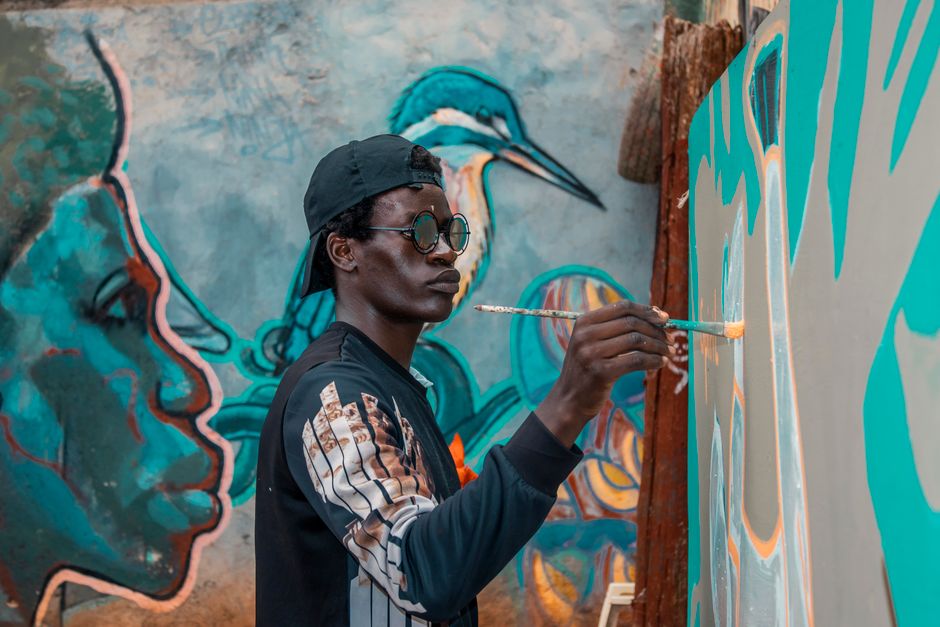
Walk through Mathare Valley today and you'll encounter murals that command attention—bold geometries, political commentary, and portraits of community heroes splashed across concrete walls that once carried only graffiti and grime. This transformation didn't happen overnight. Nairobi's street art movement, born from grassroots activism and youthful defiance in the early 2000s, has evolved into a sophisticated creative ecosystem that now attracts international galleries, sponsors, and artists seeking authenticity in an increasingly sanitised global art world.
The story begins in the industrial pockets of Eastleigh and Industrial Area, where young artists—many without formal training—began reclaiming public space as a form of expression during a period when the city's cultural institutions felt distant and exclusive. Early practitioners faced pushback from authorities and property owners, yet persistence paid off. By the mid-2010s, neighbourhoods like Kilimani and the corridor along Nairobi River had become open-air galleries, with murals commanding walls alongside shabby shops and housing blocks.
The pivot point came around 2017-2018, when organisations like Mathare Social Centre and independent collectives began formalising the scene through curated projects and artist residencies. Property developers and business owners, initially reluctant, gradually recognised the commercial and cultural value of vibrant streetscapes. Rents in previously overlooked areas near Nairobi Contemporary Art Institute started climbing. Gallery owners and creative studios followed, establishing what locals now call the 'creative corridor' stretching from Kilimani through Parklands.
Today's landscape is markedly different. Major festivals like Nairobi Street Art Festival draw participants from across East Africa and beyond. Individual murals now cost between KES 200,000 and KES 1.5 million depending on scale and artist reputation—a far cry from the early days of unpaid, ad-hoc work. Artists who once painted illegally now negotiate licensing agreements with the Nairobi City County.
Yet tensions persist. Gentrification pressures have begun pricing out original community members from neighbourhoods their street art helped revitalise. Some argue the scene has become commodified, stripped of its rebellious edge. Others counter that professionalisation has enabled artists to earn sustainable incomes, elevating the medium's status.
What remains undeniable is the scene's trajectory: from marginalised urban practice to cultural cornerstone. Nairobi's street art has evolved from asking permission to demanding recognition—and the city's physical and cultural geography bears the imprint of that journey.
This article was compiled by AI and screened before publishing. See our editorial standards.