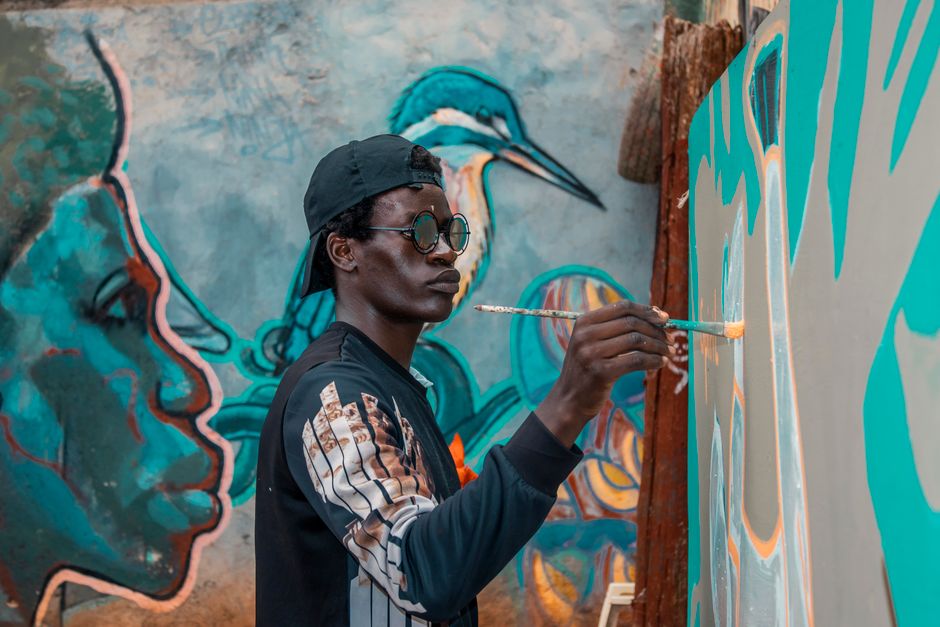
Walk along the sprawling industrial corridor of Nairobi's industrial area, or through the increasingly vibrant streets of Eastleigh, and you'll encounter a city in visual conversation with itself. Towering murals depicting everything from Kenyan wildlife to political commentary now dominate walls that, five years ago, bore only weathered advertisements and gang markings. This isn't accidental beautification—it's the result of a deliberate, community-driven movement that has turned street art into a legitimate cultural force reshaping how Nairobi sees itself.
The shift has been driven largely by collectives like GoDown Arts Centre in Kamukunji and independent artist networks operating across neighbourhoods like Mathare, Karen, and Kilimani. What began as isolated tagging has evolved into structured mural projects, community engagement initiatives, and increasingly, commercial recognition. Local property developers and businesses along Ngong Road and around Upper Hill have begun commissioning artists, acknowledging that street art attracts foot traffic and enhances neighbourhood appeal—a stark change from a decade ago when murals were routinely painted over.
The economic implications are tangible. Street art tours, once non-existent, now operate regularly through platforms connecting tourists and art enthusiasts. Young artists report earning between KES 15,000 to 50,000 per commissioned mural, with established practitioners commanding significantly more. Simultaneously, informal creative clusters have emerged organically—spaces where artists gather, collaborate, and innovate without formal institutional backing.
What distinguishes Nairobi's movement from purely commercial street art trends is its roots in social commentary and community activism. Many artists use their work to address issues ranging from environmental degradation to gender violence, transforming walls into platforms for public discourse. The Nairobi Street Art Festival, now in its fourth iteration, attracts over 2,000 visitors annually and has legitimised the practice within mainstream cultural circles.
Yet challenges persist. Zoning regulations remain unclear, property owners' rights conflict with artistic freedom, and the line between sanctioned public art and unauthorised tagging continues to blur. City County authorities have begun drafting clearer guidelines, though implementation remains inconsistent across divisions.
What's undeniable is the momentum. Nairobi's street art movement has transcended the margins to become central to how the city's creative class—both emerging and established—expresses identity, dissent, and vision. For a city navigating rapid urbanisation and cultural flux, these painted walls represent something profound: a community claiming ownership of public space, one brushstroke at a time.
This article was compiled by AI and screened before publishing. See our editorial standards.