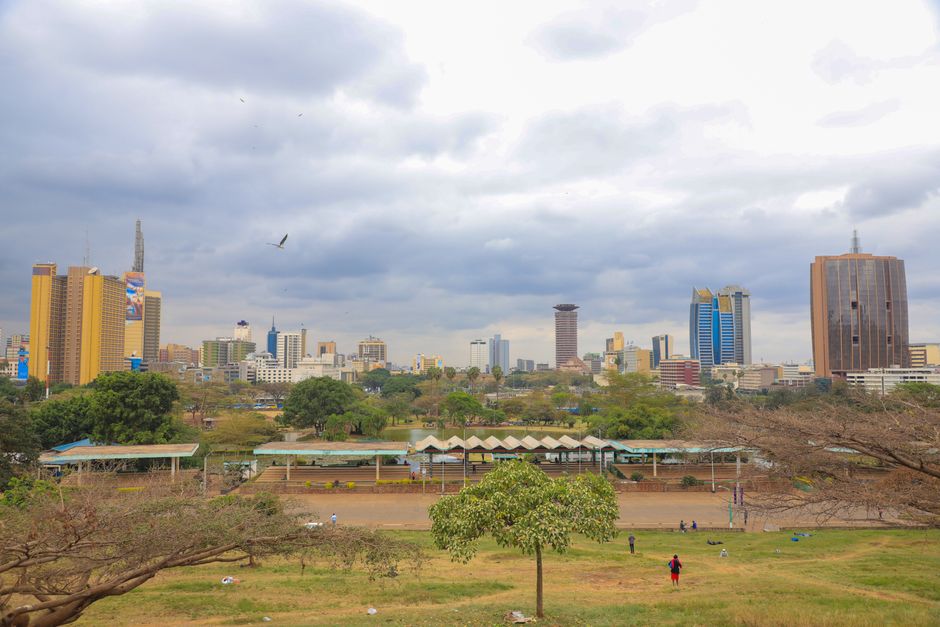
Nairobi added roughly 500,000 residents between 2019 and 2024, according to Kenya National Bureau of Statistics projections released in late June, pushing the metropolitan population past 5.8 million. That number landed in City Hall this week with the force of an overdue bill. The Nairobi Metropolitan Services transition office confirmed on Thursday that three ward-level informal settlement upgrading tenders — covering Mukuru kwa Njenga, Korogocho, and sections of Mathare — have been suspended pending a procurement audit, throwing timelines into uncertainty just as pressure from the World Bank's Urban Support Programme mounts ahead of a September disbursement review.
The timing is not incidental. Kenya is running an IMF-supervised fiscal consolidation programme that has already clipped discretionary spending across line ministries, and the Ruto administration is acutely sensitive to public anger after last year's Gen Z tax revolt. Informal settlement upgrading is politically popular but capital-intensive, and the procurement suspension signals exactly the kind of institutional friction that has historically derailed Nairobi's growth ambitions before they compound.
Three Neighbourhoods, One Bottleneck
Mukuru kwa Njenga alone houses an estimated 300,000 people across a strip of land running parallel to Mombasa Road between Industrial Area and Syokimau. The upgrading programme there, begun under the Nairobi Regeneration Plan in 2022, was supposed to deliver 4,200 tenure-secure plots and piped water connections to roughly 18,000 households by mid-2026. As of this week, construction on Phase 2 — the water reticulation component — has not resumed since contractors demobilised in March. Residents who spoke to The Daily Nairobi near the Lunga Lunga Road access point described water costs of up to Ksh 20 per 20-litre jerry can from private kiosk operators, four times the rate in formally serviced Nairobi West two kilometres away.
Korogocho presents a different but related problem. The Nairobi City County and the Aga Khan Development Network's Urban Programme have jointly mapped 9,700 structures there, but the mapping data — collected at a cost of Ksh 47 million — has not been formally gazzetted, meaning it cannot legally anchor tenure documents. Without gazettement, households cannot access mortgage products from the Kenya Mortgage Refinance Company, which expanded its low-income window to Ksh 1.5 million per unit in January 2026. The money exists. The paperwork does not.
What the Next Ninety Days Actually Decide
The World Bank review in September is not merely procedural. The Urban Support Programme's second tranche — worth $150 million — is conditioned on Kenya demonstrating measurable progress on three indicators: active construction in at least two informal settlement zones, a functional land information system at the Ardhi House national lands registry on Ngong Road, and a published Nairobi Integrated Urban Development Plan that supersedes the 2018 document. None of the three is fully in place.
City planners and housing-sector analysts have been meeting this week at the Kenya Urban Roads Authority offices on Haile Selassie Avenue, working through a compressed compliance schedule. The procurement audit on the stalled tenders is expected to conclude by July 25. If clean, tenders could be re-awarded within three weeks, theoretically putting shovels back in Mukuru by mid-August — tight, but achievable before the Bank's review window opens.
The broader five-year picture is starker. Nairobi's population is on track to reach 7.5 million by 2031 on medium-growth assumptions, with two-thirds of new arrivals expected to settle in informal zones. The commuter rail expansion from Nairobi Central Station toward Ruiru and Embakasi — the most credible infrastructure response to that density — requires those neighbourhoods to be stable enough for transit-oriented development to function. Suspend the upgrading programme for another quarter, and the sequencing logic collapses.
The city has navigated worse — cholera in 2023, the fiscal freeze that followed the finance bill protests. What is different now is the convergence of deadlines: the World Bank clock, the IMF fiscal ceiling, and an electorate whose tolerance for stalled promises has a documented breaking point. The decisions made at Ardhi House and City Hall between now and September will not only determine which neighbourhoods get water connections. They will determine whether Nairobi's growth story remains one worth telling.