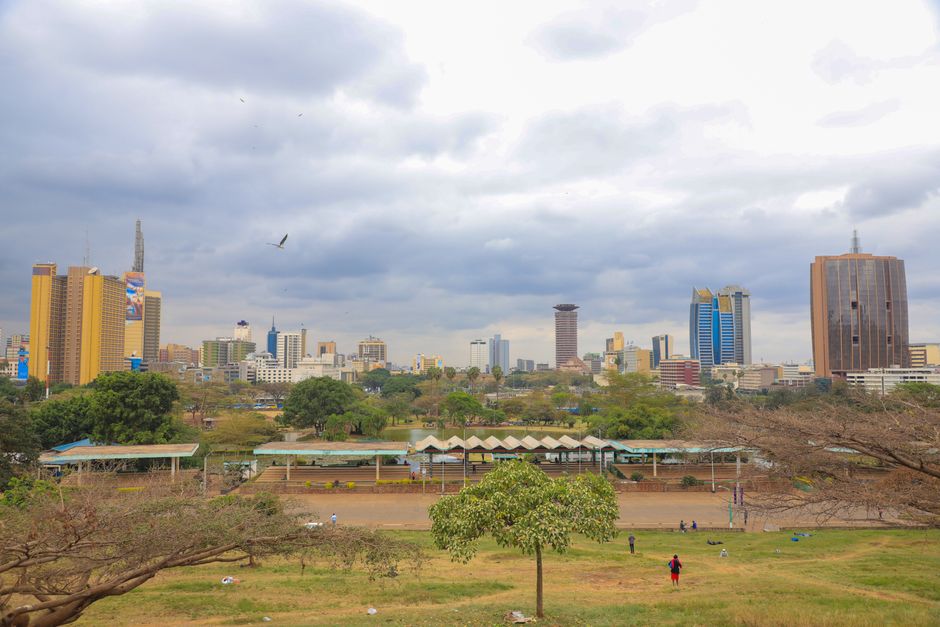
Nairobi Road Construction Delays: Residents Demand Answers
Kasarani's Mwiki Road stalled for 11 months. Why Nairobi infrastructure projects keep getting abandoned between budget cycles—and what residents are asking now.
Kasarani's Mwiki Road stalled for 11 months. Why Nairobi infrastructure projects keep getting abandoned between budget cycles—and what residents are asking now.
The rains have stopped, but the mud on Mwiki Road in Kasarani has not. Residents picking through the orange-brown sludge on a Tuesday morning describe a stretch of tarmac that has been "under construction" for eleven months, a half-finished drainage channel that fills with sewage when it floods, and a Kenya National Highways Authority notice board whose projected completion date expired last October. This is infrastructure in Nairobi right now: announced, photographed, then quietly abandoned between budget cycles.
The timing matters. The Ruto administration is deep inside an IMF Extended Fund Facility arrangement that has locked Kenya into primary surplus targets through at least 2027. Capital expenditure — the money that actually pours concrete and lays rail — is the first line item that Treasury trims when revenue shortfalls bite. And revenue shortfalls have been biting hard ever since the Finance Bill 2024 collapsed under street pressure from the Gen Z movement in June and July of last year, forcing the government to withdraw proposed levies that would have raised roughly Sh346 billion annually.
In Mathare, along Juja Road, a community elder who has lived in the settlement for three decades says the neighbourhood has seen surveyors arrive four times in as many years. The Nairobi Metropolitan Services, before it was wound down and handed back to the county in 2022, pegged Mathare for drainage and road upgrades under the Sh3.6 billion informal settlement programme. Work began on two access lanes near Moi Air Base junction. One is finished. The other ends abruptly at a chain-link fence, a pile of ballast gravel turning grey in the sun.
Down in Mukuru kwa Njenga, the Mukuru Special Planning Area — a legally gazetted zone covering roughly 640 acres — was supposed to coordinate tenure security, road access and sanitation upgrades through the Nairobi City County government. Residents say Phase 1 land adjudication moved faster than the physical works. A market trader who has operated a hardware stall near the Likoni Road junction for eight years described paying a business permit fee that rose from Sh5,000 to Sh7,500 this financial year, while the access road to her plot remains unpaved. "They find us when it is time to collect," she said. "They lose us when it is time to build."
The Nairobi Metro Commuter Rail project, funded partly through a 2021 African Development Bank loan of $167 million, has delivered some visible results — the Ruiru and Embakasi Village stations are operational, and Kenya Railways reported a 34 percent increase in daily ridership on the Nairobi Central to Syokimau corridor between January and March 2026. But connectivity beyond the stations is patchy. Commuters disembarking at Imara Daima face a 1.2-kilometre walk on a road with no pavement to reach the nearest matatu stage on Mombasa Road.
Community groups in Kayole, organised under the Kayole Community Justice Centre, have drafted a memorandum to the Nairobi City County assembly asking that ward development fund allocations — currently Sh104 million per ward under the 2025-26 budget — carry mandatory public reporting requirements before disbursement. The idea is straightforward: publish the plan, post it at the chief's office and the ward office, hold a public meeting, then start the work. Three other wards in Embakasi East have adopted informal versions of the same approach after their MCAs faced protests last March.
For residents near the Outer Ring Road expansion corridor, the immediate concern is more basic. Construction traffic has cracked the surface water pipes serving parts of Umoja Estate, and the Nairobi Water and Sewerage Company has scheduled repairs for August — the third rescheduling since February. A mother of two who carries twenty-litre jerricans from a kiosk 400 metres from her house said she spends Sh60 a day on water that used to come from the tap. That is Sh1,800 a month she did not budget for a year ago.
The infrastructure crossroads Nairobi faces is real and measurable. The question coming out of its neighbourhoods is whether the government renegotiating IMF conditionalities in Nairobi's fiscal year 2026-27 review — scheduled for September — will ring-fence capital works already under contract, or let another construction notice board bleach in the sun while residents carry jerricans and navigate the mud.
How does this story make you feel?
Spread the word
About this article
Published by The Daily Nairobi
Daily brief
Free, in your inbox before 7am. Weekdays.
More in News